
Table of Contents
Table of Contents
Share This Post
The way people discover businesses online has changed significantly. Search is no longer limited to typing a few words into Google and clicking the first result. People now use search engines to compare companies, research products, find local services, read reviews, answer questions and decide whether a business deserves their attention.
For US businesses, this creates both a challenge and an opportunity.
Competition is increasing across almost every industry, from ecommerce and SaaS to professional services, healthcare, finance, home improvement and local businesses. Ranking well therefore requires more than simply publishing content and waiting for traffic to appear.
A stronger organic search presence comes from combining useful content, website authority, relevant backlinks, strong brand signals and a clear understanding of what potential customers are actually searching for.
Key Point
Organic visibility is not just about getting more visitors. The real objective is to become visible when the right people are searching for the products, services or information your business provides.
1. Start With the Searcher, Not the Keyword
Keyword research remains important, but businesses should stop treating keywords as isolated phrases.
A keyword represents a need, question or problem. Understanding that underlying intent can produce a much stronger SEO strategy.
For example, someone searching for “best accounting software for small business” is behaving differently from someone searching for “accounting software pricing.” The first search may indicate research, while the second could indicate stronger commercial intent.
US businesses should therefore organize their SEO opportunities around different stages of the customer journey.
Informational searches can introduce people to the brand.
Commercial searches can help potential customers compare solutions.
Transactional searches can bring users who are ready to take action.
The strongest organic strategies connect all three.
SEO Insight
Don’t ask only, “How many people search for this keyword?”
Ask, “If we rank for this keyword, are the people searching it likely to become customers?”
2. Build Topic Authority Instead of Publishing Random Articles
A common SEO mistake is publishing unrelated blog posts simply to increase the number of pages on a website.
More content does not automatically mean better rankings.
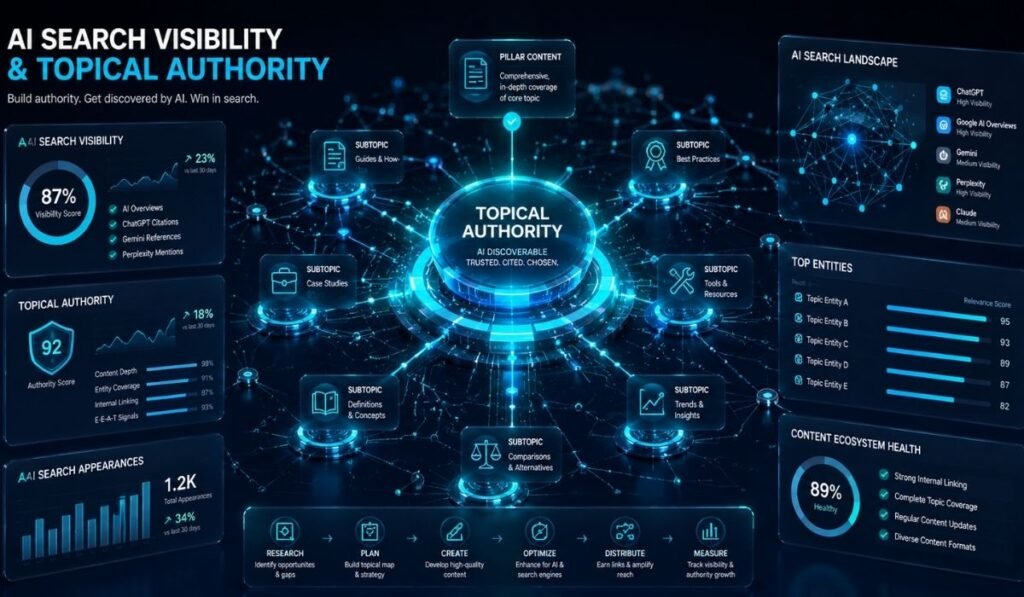
A better approach is to build topical authority around subjects that matter to the business.
Imagine a US cybersecurity company wants to attract businesses looking for security solutions. Instead of publishing random technology articles, it could build a complete content ecosystem around cybersecurity for businesses.
That could include:
- Cybersecurity risk assessments
- Employee security awareness
- Business data protection
- Phishing prevention
- Network security
- Security compliance
- Incident response
- Cybersecurity best practices
Each piece of content can support the others and strengthen the website’s overall relevance.
This gives search engines a clearer understanding of what the business knows and what audience it serves.
3. Make Your Website Worth Ranking
SEO can bring people to a website, but the website itself still needs to provide a strong experience.
If visitors arrive and immediately struggle to understand what the business does, organic traffic will not solve the underlying problem.
A strong website should make important information easy to find.
Visitors should quickly understand:
- What the business offers
- Who the service is for
- Why the company is different
- What evidence supports its claims
- How to contact or purchase from the business
This is particularly important for competitive US markets where customers can often choose from dozens of alternatives.
Conversion Box
Traffic without trust is weak traffic.
A business can rank well and still generate poor results if visitors cannot understand the offer, find evidence of credibility or see a clear next step.
4. Invest in Relevant Authority and Backlinks
Backlinks remain an important part of building website authority, but the strategy needs to be selective.
A website does not become stronger simply because it has thousands of backlinks.
Relevance matters.
For example, a software company would generally benefit more from earning links from respected technology, business or SaaS publications than from unrelated websites with no connection to its industry.
The same principle applies to local businesses.
A US law firm, construction company, marketing agency or ecommerce brand should look for legitimate opportunities within its own industry and market.
Useful approaches can include:
- Relevant guest contributions
- Industry publications
- Digital PR
- Business partnerships
- Expert commentary
- Resource pages
- Data-driven content
- Local and industry directories where appropriate
The objective is to build a backlink profile that looks natural and supports the authority of the brand.
Link Building Box
Quality beats quantity.
One relevant editorial backlink from a trusted website can be considerably more valuable than a large collection of unrelated, low-quality links.
5. Strengthen Local Search Visibility
For businesses that serve specific locations, national SEO should not be the only focus.
Local search can provide highly valuable opportunities.
A business operating in Chicago, Dallas, Miami, New York, Los Angeles or another competitive US market may be able to attract customers by developing strong visibility for location-specific searches.
This requires more than putting a city name on a page.
Businesses should develop genuine local relevance through useful location-focused content, accurate business information, customer reviews, relevant citations and links from appropriate local sources.
A company serving multiple cities can also create useful location pages, but those pages should provide real value rather than simply replacing one city name with another.
6. Use Competitor Research to Find Gaps
Your competitors are already showing you what search engines consider relevant.
That makes competitor analysis one of the most useful parts of an SEO strategy.
Look at the businesses ranking for your important search terms and examine:
- Which topics they cover
- Which pages attract organic traffic
- Which websites link to them
- What types of content earn visibility
- Which commercial pages perform well
- Where their content appears weak or incomplete
The purpose is not to copy competitors.
The purpose is to identify opportunities they have missed.
For example, if several competitors rank for a broad topic but none provide a detailed practical resource, creating a genuinely better resource could give your business an opportunity to compete.
Competitor Research Box
Don’t ask, “How can we copy the websites ranking above us?”
Ask, “What are they doing well, where are they weak, and what can we provide that is genuinely better?”
7. Build a Brand People Recognize
Organic search and brand building are becoming increasingly connected.
When people repeatedly encounter a company through useful articles, industry publications, social platforms, reviews and search results, familiarity grows.
That familiarity can influence whether someone clicks on your result or chooses your company over an unfamiliar competitor.
For this reason, businesses should not treat SEO as something completely separate from marketing.
Publishing expert content, contributing to industry discussions, earning media coverage and building a recognizable online presence can all support broader search visibility.
A company that becomes known within its market has an advantage that is difficult to create through keywords alone.
8. Don’t Chase Every SEO Trend
SEO changes constantly, and 2026 is no different.
New search features, AI-powered results and changes in user behavior may create pressure for businesses to constantly change direction.
That can become expensive and counterproductive.
Businesses should focus on fundamentals that remain valuable regardless of individual algorithm changes:
Useful information.
Relevant authority.
Strong technical foundations.
Trustworthy websites and links.
Clear search intent.
A recognizable brand.
New technology should be used where it improves the process, but businesses should avoid creating large amounts of low-value content simply because producing it has become easier.
Strategy Box
Don’t build an SEO strategy around a trend.
Build it around your customers. Trends will change. Customer problems and commercial needs are much more stable.
9. Measure Business Results, Not Vanity Metrics
Ranking number one can look impressive, but rankings alone do not pay the bills.
A business needs to understand whether organic search is producing meaningful commercial results.
Important metrics can include:
- Qualified organic traffic
- Leads
- Enquiries
- Sales
- Conversion rates
- Revenue from organic search
- Growth of important landing pages
- Visibility for commercial keywords
A page receiving 20,000 visitors may appear successful, but if those visitors have no interest in the company’s services, the traffic has limited business value.
Meanwhile, a page attracting 1,000 highly relevant visitors may generate substantially more leads.
This is why SEO reporting should connect search performance with actual business objectives.
10. Treat SEO as an Ongoing Process
One of the biggest mistakes businesses make is treating SEO as a one-time project.
A website may receive an initial optimization campaign, a few new articles and some backlinks, but the market does not stop moving.
Competitors publish new content.
New businesses enter the market.
Search behavior changes.
Existing pages lose rankings.
New opportunities appear.
Successful businesses therefore continue reviewing their organic strategy rather than assuming the work is finished.
Regular competitor analysis, content improvements, authority building and performance reviews can help maintain momentum.
Long-Term Growth Box
SEO is closer to building an asset than running an advertisement.
Paid advertising can produce immediate visibility while the budget is active. Organic search requires more patience, but a strong website and authority profile can continue generating value over time.
Building a Stronger Organic Presence in 2026
US businesses do not need to rank for every possible keyword to succeed in organic search.
They need to become highly visible for the searches that matter to their customers.
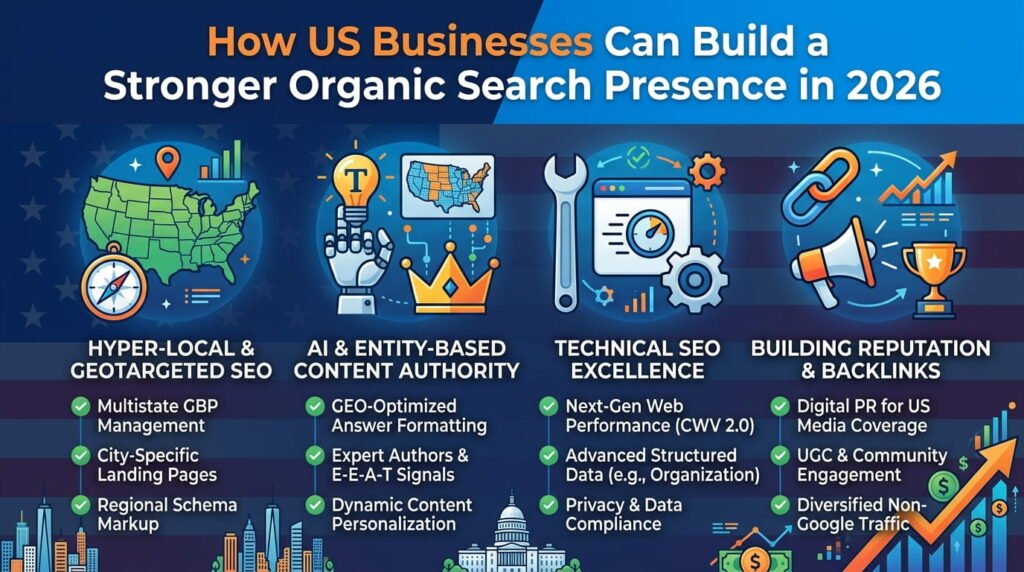
That means understanding search intent, developing useful topical content, building relevant authority, improving local visibility where appropriate, studying competitors and measuring the results that actually affect revenue.
The biggest opportunity in 2026 is not simply getting more pages indexed.
It is building a stronger digital presence that search engines can understand and customers can trust.
Businesses that approach SEO as a long-term investment rather than a shortcut are better positioned to compete as search becomes more crowded and more sophisticated.
Organic search success is not created by one tactic.
It comes from consistently doing the important things well, creating genuine value, earning authority, understanding the market and giving potential customers a clear reason to choose your business.
Comments
Related posts
AI SEO, SaaS, SEO
September 4, 2026
AI SEO, SEO
September 3, 2026