
Software buyers are changing the way they research products.
Instead of opening several search results, reading dozens of pages, and comparing software options manually, many users now ask AI-powered search tools direct questions. They may want to know which CRM is best for a growing sales team, which project management platform works well for remote employees, or which software is a better alternative to a product they already use.
That change creates a new challenge for software companies.
Having a strong website and ranking well in traditional search is still important, but it may not be enough to make a brand visible throughout the modern search journey. A company also needs to be easy for AI systems to understand, associate with the right topics, and recognize as a credible source.
This is where a Generative Engine Optimization (GEO) agency can help.
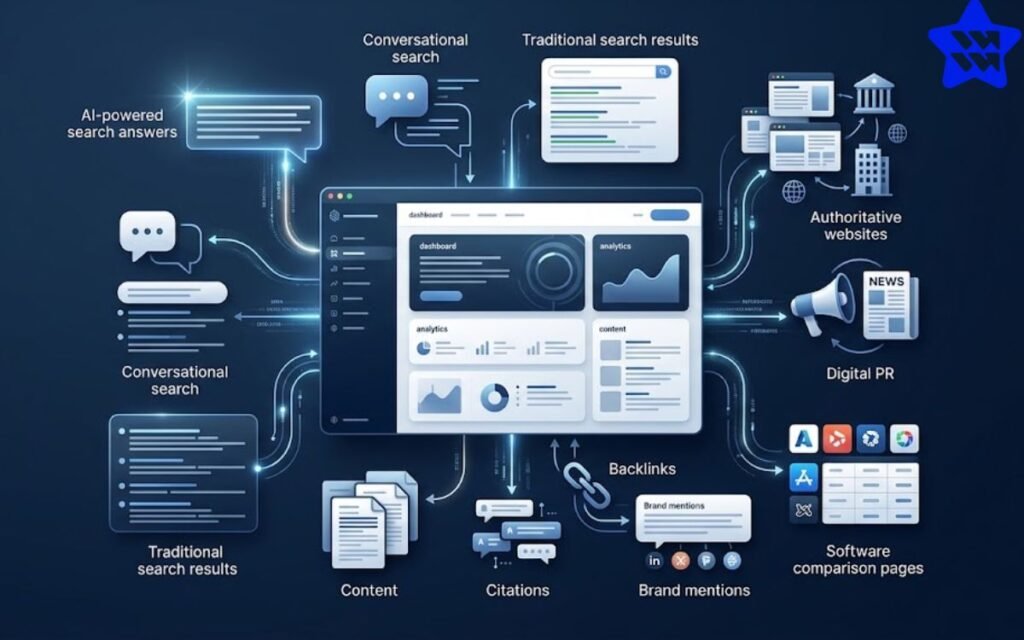
Rather than treating AI search as a completely separate marketing channel, a good GEO strategy brings together technical SEO, useful content, brand authority, digital PR, citations, relevant links, and a clear online presence.
What Does AI Search Visibility Mean for a Software Company?
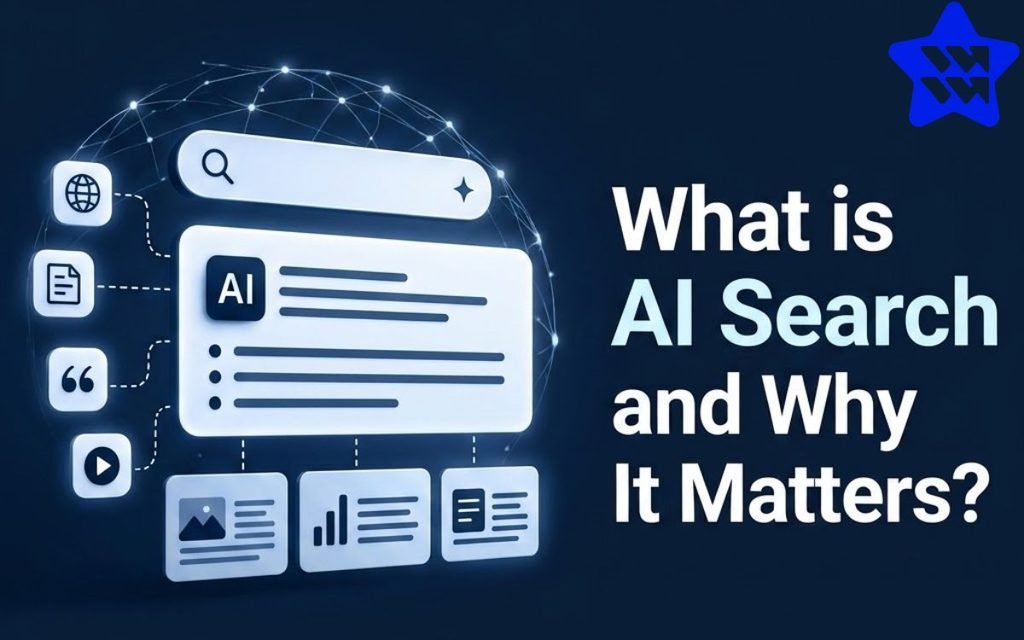
AI search visibility is about how often and how accurately a software company appears when potential customers ask AI-powered search systems questions related to its products, services, category, or industry.
For example, someone might ask:
What are the best CRM platforms for a small B2B sales team?
Another user could ask:
What are the best alternatives to [software product]?
Or:
Which project management software is suitable for distributed teams?
In each case, the user is not necessarily searching for a specific company.
They are looking for an answer.
If your software company is consistently included in relevant answers, comparisons, recommendations, or cited sources, it has an opportunity to reach customers earlier in the buying process.
That is the practical side of AI search visibility.
It can involve:
- Brand mentions
- Product recommendations
- Comparisons with competitors
- Citations from authoritative sources
- Inclusion in industry-related answers
- Visibility for problem-based searches
- Association with relevant software categories and use cases
The objective is not simply to get a company name mentioned. The objective is to build enough relevant information and authority around the brand that it becomes a credible answer to the questions potential customers are asking.
Why Is AI Search Important for Software Companies?
Software purchases usually involve more research than a simple consumer purchase.
A potential customer may first identify a problem, explore possible solutions, compare different software categories, research individual products, check features and pricing, read reviews, and finally compare a shortlist of vendors.
AI search can influence several of these stages.
A business owner might ask:
“How can I automate lead management?”
Then:
What type of CRM should I use?
And later:
Which CRM is best for a 20-person B2B sales team?
By the time the customer reaches the final question, several software companies may already have been introduced into the conversation.
This means software brands need to think beyond individual keywords.
The bigger goal is to become visible across the questions that surround their category, product, problems, use cases, and competitors.
How Can a GEO Agency Improve AI Search Visibility?
A professional GEO agency does more than publish articles and hope that an AI platform eventually mentions the brand.
The process should begin with understanding how the company is currently represented online and where the biggest visibility gaps exist.
1. Start With an AI Search Visibility Audit
Before changing anything, a GEO agency should establish where the company stands.
The agency can examine relevant questions and identify:
- Whether the brand is appearing in AI-generated answers
- Which competitors are being mentioned
- What types of queries produce competitor visibility
- Which websites and sources are being referenced
- How the company is described across the web
- Whether important product information is missing or inconsistent
- Which topics represent the strongest opportunities
This gives the company a baseline.
Without an initial assessment, it is difficult to know whether a GEO campaign is actually improving visibility or simply producing more content.
A good audit should also look beyond the company’s own website. AI search visibility is influenced by the wider information ecosystem surrounding a brand.
2. Build a Clear Entity Around the Software Brand
One of the biggest mistakes software companies make is focusing entirely on keywords.
Search engines and AI systems need context.
A software company should have a clear relationship between its brand, products, category, features, industries, customers, use cases, and competitors.
For example:
Company → Product → CRM → Lead Management → B2B Sales → Small Businesses
When this information is consistent across the company’s website and relevant third-party sources, it becomes easier to understand what the company does and where it fits within its market.
A GEO agency can help strengthen this entity by reviewing important pages, product descriptions, company information, author profiles, industry references, and external mentions.
The goal is simple: make the brand’s identity and expertise clear.
3. Create Content Around Real Buyer Questions
Publishing dozens of generic blog posts is not a GEO strategy.
Software companies should create content around the questions customers actually ask before making a purchasing decision.
For a CRM company, this could include:
- What is CRM software?
- How does CRM improve sales management?
- CRM vs. marketing automation
- Best CRM for small B2B teams
- How much does CRM implementation cost?
- How to choose a CRM for a growing business
- CRM migration checklist
- Salesforce alternatives
- CRM comparison for remote sales teams
These topics cover different stages of the buying journey.
The strongest content does not simply target a keyword. It answers a genuine question with enough depth and evidence to be useful.
That means explaining concepts clearly, including practical examples, addressing common objections, presenting original insights, and keeping important information updated.
4. Make Content Useful, Specific, and Easy to Reference
A software company’s content should demonstrate knowledge that goes beyond information already available on hundreds of other websites.
Compare these two approaches.
| Weak Software Content | Strong Software Content |
|---|---|
| Generic definitions | Detailed expert explanations |
| Keyword-focused writing | Buyer-focused topics |
| Rewritten competitor information | Original insights and analysis |
| Unsupported claims | Data, examples, and evidence |
| Thin product descriptions | Detailed use cases |
| Generic comparisons | Specific product comparisons |
| Anonymous articles | Clear authorship and expertise |
This distinction matters because useful content gives other websites a reason to reference it.
A detailed industry study, original research, practical benchmark, expert guide, or genuinely useful comparison can earn attention that a generic 800-word article usually will not.
For software companies, expertise is particularly valuable because customers are often making decisions that affect their teams, budgets, security, and long-term operations.
5. Strengthen Third-Party Authority

A company cannot build its entire reputation by talking about itself.
If a software company claims that it is a leading solution, but there is little independent information supporting that reputation, the claim has limited value.
This is why a GEO strategy should include third-party authority.
A GEO agency may work on:
- Industry publications
- Editorial mentions
- Digital PR
- Expert interviews
- Relevant guest contributions
- Industry-specific websites
- Product reviews
- Software comparisons
- Authoritative directories where appropriate
- Relevant backlinks and brand mentions
The objective is not to collect as many links or mentions as possible.
Relevance matters.
A mention on a respected website within the company’s industry can be considerably more useful than a large number of unrelated links.
6. Use Link Building as Part of a Larger Authority Strategy
GEO does not make traditional SEO irrelevant.
Relevant backlinks still have value because they can strengthen a website’s authority, help users discover the brand, provide referral traffic, and contribute to the broader network of information surrounding a company.
However, software companies should avoid treating link building as a numbers game.
Getting hundreds of low-quality links is not a substitute for earning relevant editorial references.
A stronger approach focuses on:
- Topical relevance
- Editorial context
- Trusted publications
- Quality content
- Brand mentions
- Industry relationships
- Natural referral opportunities
The purpose is to build a stronger presence across the web, not simply increase a backlink count.
7. Fix the Technical Foundation
AI search visibility does not eliminate the importance of technical SEO.
In fact, software websites can have complicated technical structures.
They may include product pages, feature pages, documentation, pricing pages, knowledge bases, blogs, subdomains, dynamic URLs, and JavaScript-heavy applications.
A GEO agency should therefore examine areas such as:
- Crawlability
- Indexability
- Site architecture
- Internal linking
- JavaScript rendering
- Canonicalization
- Duplicate content
- Structured data
- Page performance
- Documentation structure
- Important product and solution pages
If important information is difficult for search systems to access, understand, or index, content and authority-building efforts can lose their effectiveness.
Technical SEO is therefore part of the foundation rather than an optional extra.
8. Optimize the Entire Software Buying Journey
One of the strongest GEO opportunities for software companies is to stop thinking only about product-related searches.
Customers have questions before they ever search for a particular brand.
The journey may look like this:
Problem → Research → Solution → Comparison → Recommendation → Purchase
For example:
Problem
How can a small sales team manage leads more efficiently?
Research
What is CRM software and how does it work?
Solution
What type of CRM is best for a small B2B business?
Comparison
HubSpot vs. Salesforce for a small sales team
Recommendation
What are the best CRM platforms for a 20-person sales team?
Purchase
Which CRM has the best features and pricing for my business?
A software company that creates useful information across this entire journey has more opportunities to become part of the customer’s research process.
That is much stronger than relying on one product page to generate every potential customer.
How Do SEO and GEO Work Together?
GEO should not be treated as a replacement for SEO.
The two disciplines address different aspects of modern search visibility, but they overlap in important areas.
| Traditional SEO | GEO |
|---|---|
| Google organic visibility | AI search visibility |
| Keyword rankings | Conversational queries |
| Search intent | Question-based discovery |
| Technical optimization | Accessible and understandable information |
| Backlinks | Citations and authoritative mentions |
| Organic traffic | AI discovery and referral opportunities |
| SERP visibility | AI-generated answer visibility |
The strongest strategy combines both.
Technical SEO creates a solid foundation. Content answers customer questions. Link building and digital PR strengthen authority. Entity optimization clarifies the brand. GEO then brings these elements together around the way people increasingly search for information.
For a software company, this integrated approach is more practical than running separate SEO and GEO campaigns that have no connection to each other.
How Long Does It Take to Improve AI Search Visibility?
There is no legitimate fixed timeline for AI search visibility.
Any agency promising that a software company will become the top AI recommendation within a specific number of days should be treated with caution.
Results depend on several factors, including:
- Existing domain authority
- Brand recognition
- Competition
- Content quality
- Technical condition
- Number and quality of third-party references
- Industry competitiveness
- Existing search visibility
- Strength of the company’s online reputation
Some improvements may appear relatively quickly, while building a strong reputation across a competitive industry can take considerably longer.
The right approach is to establish a baseline, implement the strategy, monitor changes, and connect visibility improvements to meaningful business outcomes.
How Should a Software Company Measure GEO Success?
AI visibility should not be measured using one metric.
A company can monitor:
- AI brand mentions
- Citation frequency
- Competitor visibility
- Inclusion in relevant recommendations
- Source visibility
- Organic traffic
- Branded searches
- Referral traffic
- Qualified leads
- Conversions
- Revenue
This distinction is important.
Getting mentioned by an AI system is not automatically a business result.
The real objective is to increase the chances that potential customers discover the company, understand its value, trust its expertise, and eventually become customers.
What Should a Software Company Do First?
If a software company wants to improve its AI search visibility, the first step should not be publishing hundreds of new articles.
Start with an assessment.
A practical process looks like this:
- Audit current AI search visibility.
- Identify the questions potential customers are asking.
- Analyze competitors appearing in those answers.
- Review the company’s entity and brand information.
- Fix technical SEO problems.
- Build content around important buyer questions.
- Create original and genuinely useful resources.
- Strengthen authority through digital PR and relevant links.
- Improve important product, solution, and comparison pages.
- Monitor AI visibility alongside traffic, leads, and conversions.
This approach gives the company a clear system instead of a collection of disconnected SEO activities.
Final Thoughts
AI search is changing how software companies can be discovered.
Customers no longer have to search for a company by name. They can describe a problem, ask for recommendations, compare products, or request a shortlist and let an AI-powered search system help them evaluate the available options.
That makes visibility across the wider information ecosystem increasingly important.
A GEO agency can help a software company respond to this change by combining technical SEO, buyer-focused content, entity optimization, digital PR, citations, relevant link building, and ongoing visibility analysis.
The goal is not to manipulate AI-generated answers or chase a temporary ranking.
It is to build a software brand that is clear, authoritative, useful, well-referenced, and easy to discover wherever potential customers are looking for solutions.
For software companies competing in crowded markets, that broader approach to search visibility can become an important part of long-term digital growth.