
Table of Contents
Table of Contents
Share This Post
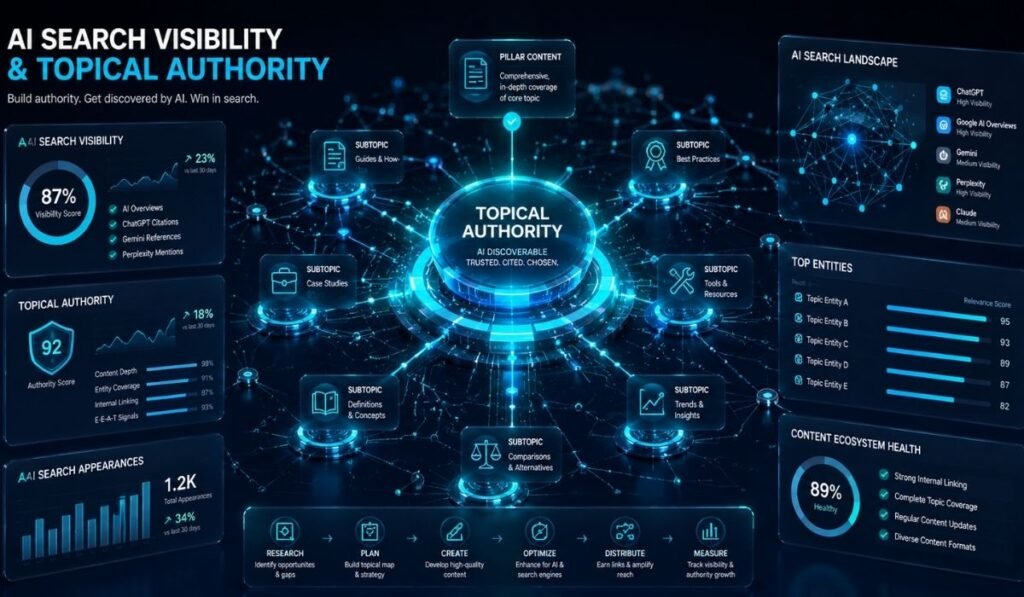
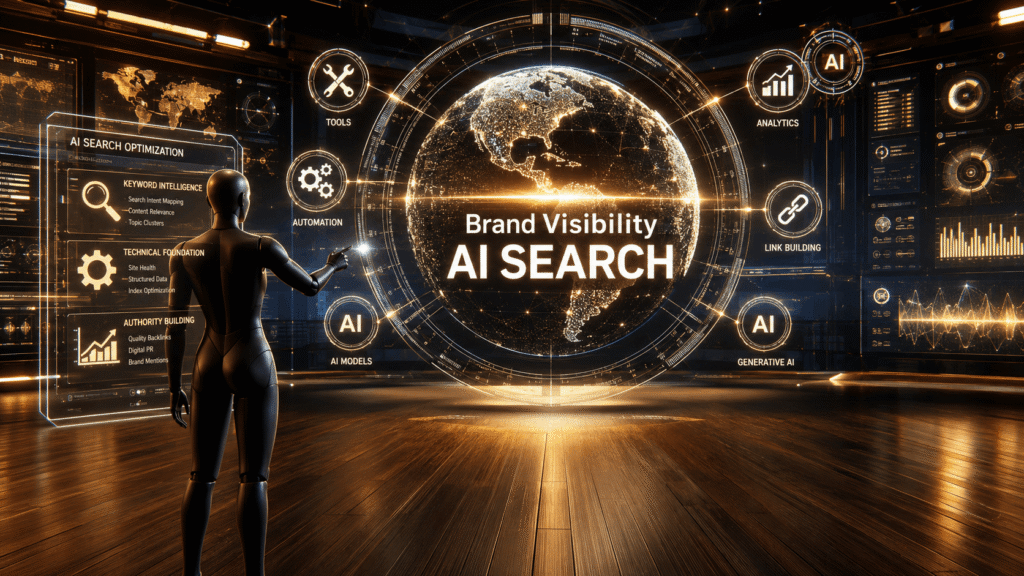
Modern buyers now discover brands through AI-powered tools rather than traditional search results. This shift changes how companies must approach their digital presence to remain visible. Implementing b2b generative engine optimization services is no longer optional for firms aiming to capture high-intent leads in the United States.
b2b generative engine optimization services
These strategies do not replace your current marketing efforts. Instead, they complement your existing organic practices by ensuring your brand remains relevant in AI-driven discovery. By aligning your content with how machines process information, you build a foundation for sustainable growth.
This guide explores the path to digital success across twelve essential areas. We will cover everything from technical signals and content strategy to provider selection and implementation. Mastering these elements will help you reach more buyers and secure a competitive edge in an evolving landscape.
Key Takeaways
- AI-supported discovery is fundamentally changing how B2B buyers find solutions.
- New optimization strategies work alongside traditional search marketing to boost visibility.
- Sustainable growth requires adapting content to meet the needs of modern AI models.
- Technical signals and strategic implementation are critical for long-term success.
- This comprehensive guide provides a roadmap for navigating the future of organic growth.
What Generative Engine Optimization Means for B2B Brands
Generative engine optimization represents a fundamental change in how your potential customers find solutions. For B2B organizations in the United States, this shift moves the focus from chasing simple blue-link rankings to securing a presence within AI-driven responses. Generative engine optimization is the practice of aligning your brand’s expertise with the way machines synthesize information to answer complex professional questions.
How AI Search Engines Change the Path to B2B Discovery
Traditional search behavior often involved clicking through multiple websites to piece together a solution. Today, generative search tools allow buyers to ask nuanced questions and receive immediate, consolidated answers. This means the discovery process now happens directly on the results page, often before a user ever visits a company website.
B2B buyers are increasingly using these tools to compare technical specifications or evaluate software capabilities. If your brand is not part of the underlying data that powers these answers, you risk being invisible during the most critical stages of the research journey.
Why Visibility Now Includes Answers, Summaries, and Recommendations
Modern search engines prioritize utility by providing summaries that distill vast amounts of content into actionable insights. When a potential client asks about the best enterprise security protocols, the engine generates a response based on trusted sources. Visibility now requires your content to be structured in a way that AI systems can easily extract, cite, and recommend.
This evolution changes the definition of a successful search result. It is no longer just about the position on a page; it is about being the authoritative source that the AI chooses to feature. By providing clear, data-backed answers, your brand becomes a go-to resource for the engine’s recommendation engine.
How GEO Complements, Rather Than Replaces, Traditional SEO
Many marketers worry that generative search will render their existing efforts obsolete. In reality, these two disciplines work in tandem to build a robust digital footprint. Traditional SEO remains essential for driving traffic to your owned properties and building long-term domain authority.
Think of generative engine optimization as the layer that ensures your high-quality content is understood and utilized by AI models. By maintaining a strong foundation of technical SEO and high-value content, you provide the very data that generative systems need to function. This dual approach ensures that you capture both the users who want a quick answer and those who are ready to dive deep into your technical documentation.
Why Traditional SEO Alone May Not Reach Today’s B2B Buyers
Modern B2B discovery has moved far beyond the simple blue links of the past. While ranking for specific terms was once the gold standard, the rise of AI search engines has fundamentally altered how professionals find information.
Relying on outdated tactics often leaves brands invisible in the very places where high-intent buyers are looking for answers. To stay relevant, companies must adapt their approach to meet the demands of a more sophisticated digital landscape.
The Shift From Keyword Rankings to Search Journey Visibility
Traditional B2B SEO focused heavily on capturing traffic through specific keyword volume. However, the modern buyer journey is no longer a linear path from a search bar to a landing page.
Today, visibility means being the authoritative source that AI systems cite in their summaries. It is about being present at every stage of the research process, rather than just appearing at the top of a list.
“The future of search is not just about being found; it is about being the trusted answer that guides a decision-maker toward a solution.”
Why B2B Buyers Ask Complex Questions Across Multiple Platforms
B2B buyers are increasingly turning to diverse platforms to solve complex business problems. They might start a search on a traditional engine, move to a specialized AI tool for deep analysis, and finish by checking peer reviews on social platforms.
This fragmented behavior means that a single-channel strategy is rarely enough. Brands must ensure their expertise is accessible across all these touchpoints to remain part of the conversation.
Understanding this buyer journey requires a shift in mindset. You are no longer just optimizing for a search engine; you are optimizing for the human expert who needs a reliable, data-backed answer.
Where Conventional Content Strategies Lose Influence in AI-Generated Results
Conventional content often fails when it is too shallow or overly focused on keyword density. AI search engines prioritize depth, accuracy, and clear, actionable insights over repetitive phrasing.
If your content does not provide direct value or answer the “why” behind a technical problem, it will likely be ignored by AI models. This is where many traditional B2B SEO efforts lose their influence.
To succeed, your content must be structured to be easily parsed and cited by machines. By focusing on high-quality, expert-led information, you ensure your brand remains a top choice for both users and the algorithms that serve them.
How B2B Generative Engine Optimization Services Work
A successful GEO strategy begins by aligning your brand’s unique knowledge with the way AI models process information. Rather than chasing traditional blue links, modern optimization focuses on how machines synthesize answers for your potential customers. By shifting your focus toward these new retrieval patterns, you can ensure your brand remains a primary source of truth.
Researching Buyer Questions, Topics, and Commercial Intent
The process starts with deep research into the specific questions your buyers ask during their decision-making journey. We identify the core topics that drive commercial intent, ensuring your content addresses both high-level educational needs and specific product requirements. This foundational research allows us to build a content map that mirrors the language and logic of your target audience.
Mapping Brand Expertise to AI Search Retrieval Patterns
Once we understand the buyer’s intent, we map your brand’s expertise to the specific ways AI engines retrieve and display information. We analyze how different models prioritize data, ensuring your core value propositions are easily accessible to their algorithms. This alignment is essential for maintaining AI visibility across the platforms that matter most to your business.
Strengthening Content for Accurate Summarization and Citation
To be featured in AI-generated summaries, your content must be structured for clarity and authority. Machines favor information that is easy to parse, verify, and cite as a reliable source.
Using Clear Definitions, Evidence, and Consistent Brand Language
We refine your messaging to include clear, concise definitions of complex industry terms. By maintaining consistent brand language, we help AI models build a stable profile of your company. This consistency reduces ambiguity and makes it easier for the engine to confidently present your content as an answer.
Supporting Claims With Original Research and Recognized Sources
AI models prioritize information backed by verifiable data. We integrate original research, white papers, and industry-recognized sources into your content to build trust. When your claims are supported by strong evidence, the likelihood of being cited as a primary source increases significantly.
Testing Brand Visibility Across Google AI Overviews, ChatGPT, Perplexity, and Microsoft Copilot
Finally, we monitor your performance across the major generative search platforms. It is important to note that testing should compare patterns rather than expect identical outputs from every engine. By documenting these observations, we turn raw data into a prioritized GEO strategy that improves your long-term AI visibility and keeps your brand ahead of the competition.
Core Tactics Included in B2B Generative Engine Optimization Services
Effective B2B strategies today rely on a cohesive framework that connects user intent to measurable business outcomes. Rather than focusing on isolated tasks, modern services integrate multiple disciplines to ensure your brand remains visible when AI systems synthesize information for decision-makers.
Creating Authoritative Content Around High-Value Buyer Problems
The foundation of any successful strategy is authoritative content that directly addresses the specific pain points of your target audience. By focusing on high-value problems, you position your brand as a trusted advisor during the early research phase. This content optimization ensures that AI models identify your expertise as a reliable source for their summaries.
Developing Topic Clusters That Connect Education to Conversion
Building topic clusters allows you to map out a comprehensive knowledge base that guides buyers from initial discovery to final purchase. These interconnected pages create a logical path that helps search engines understand the depth of your expertise. By linking educational resources to specific product solutions, you effectively bridge the gap between curiosity and conversion.
Improving Entity Signals for Brands, Products, and Subject-Matter Experts
Modern search systems rely heavily on entity SEO to verify the credibility of a business. By clearly defining your brand, products, and key personnel as distinct entities, you help AI engines categorize your information accurately. This process strengthens your digital footprint and ensures that your subject-matter experts are recognized as industry authorities.
Optimizing Structured Data, Internal Links, and Content Accessibility
Technical health remains a critical component of content optimization. Implementing robust structured data helps machines parse your content with precision, while a logical internal linking structure reinforces the relationship between your topics. Furthermore, prioritizing accessibility ensures that your information is easily consumable by both human users and automated crawlers.
Building Digital Recognition Through Strategic Mentions and Earned Coverage
Finally, entity SEO is bolstered by external validation from reputable industry sources. Strategic mentions and earned media coverage act as digital signals that confirm your brand’s relevance and authority. When combined with well-structured topic clusters, these external endorsements significantly improve your chances of being cited in AI-generated responses.
Creating Content That Generative Engines Trust and Recommend
To win in the era of AI search, your brand must provide answers that are both precise and deeply insightful. Modern search systems prioritize authoritative content that helps users solve complex problems without requiring them to click through dozens of links. By focusing on quality, you ensure your brand remains a primary source for AI-generated summaries.
Writing Clear, Direct Answers Without Flattening the B2B Buying Conversation
B2B decisions are rarely simple, yet generative engines often look for concise summaries. You can meet this need by providing a direct answer at the start of your content, followed by the necessary nuance. This approach respects the user’s time while maintaining the depth required for high-stakes business purchases.
Demonstrating Expertise With Customer Evidence, Data, and Technical Detail
AI models rely on verifiable facts to build trust. Incorporating proprietary data, case studies, and technical specifications helps these systems validate your claims. When you provide authoritative content backed by real-world results, you become a more reliable candidate for citation in AI responses.
Balancing Human Readability With Machine-Friendly Content Structure
Writing for machines does not mean sacrificing the human experience. You must create a bridge between complex technical concepts and the natural language used by your buyers.
Using Descriptive Headings, Concise Passages, and Natural Question Language
Organize your information using clear, descriptive headings that mirror the questions your customers ask. Keep your paragraphs short and focused on a single idea to help AI systems parse your information. Utilizing structured data further assists these engines in categorizing your expertise correctly.
Refreshing Content When Products, Regulations, or Market Conditions Change
Static content quickly loses its value in a fast-moving market. You should treat editorial maintenance as an ongoing responsibility to ensure your information remains accurate. Regular updates signal to search engines that your brand is an active, reliable authority in your field.
Connecting Thought Leadership to Relevant Products and Services
Thought leadership should always lead the reader toward a solution. By linking your insights to specific products or services, you guide the buyer through their journey. This strategy ensures that your expertise serves both the user’s need for information and your company’s commercial goals.
Technical and Brand Signals That Influence AI Visibility
To thrive in the age of generative search, you must master the technical signals that define your brand. While content quality remains paramount, the underlying architecture of your website determines how effectively AI models ingest your information. A robust approach to technical SEO ensures that your expertise is not just visible, but also correctly interpreted by complex algorithms.
Making Important Pages Easy for Search Systems to Crawl and Interpret
Search systems function by crawling and indexing vast amounts of data to build their knowledge bases. If your site structure is cluttered or blocked, these systems may struggle to identify your most valuable insights. Clear navigation and a logical hierarchy allow AI crawlers to prioritize your core business pages effectively.
You should ensure that your robots.txt file and sitemap are optimized to highlight high-value content. By removing technical barriers, you help machines understand the relationship between your services and the problems they solve for your buyers.
technical SEO
Using Organization, Product, Article, and Person Schema Markup Appropriately
Structured data acts as a bridge between human-readable content and machine-readable data. Implementing schema markup helps search engines categorize your information with precision. For instance, using Organization schema clarifies your company identity, while Product schema highlights specific offerings.
It is important to note that schema is not a magic button for instant citations. Instead, it provides the contextual framework that allows AI to confidently attribute information to your brand. When you define your authors through Person schema, you further solidify the expertise behind your content.
Maintaining Consistent Company Information Across the Web
Generative engines pull data from a variety of sources to form their answers. If your company name, address, or service descriptions vary across different platforms, you risk confusing the AI. Consistency is a critical signal that builds trust in your brand’s identity.
Audit your presence on industry directories, social profiles, and partner websites regularly. Ensuring that your core business facts remain uniform helps AI models synthesize accurate summaries about your company.
Improving Website Performance, Accessibility, and Mobile Experience
Modern search systems prioritize user experience as a proxy for quality. A website that loads quickly and functions well on mobile devices is more likely to be favored by AI algorithms. Accessibility is equally vital, as it ensures that all users—and by extension, all crawlers—can interact with your content seamlessly.
Focus on reducing page load times and optimizing your mobile layout. These improvements not only satisfy search requirements but also provide a better experience for your human visitors.
Managing Brand Accuracy When Third-Party Sources Describe the Company
Your brand’s reputation is often shaped by what others say about you online. Through strategic digital PR, you can influence the narrative that third-party sources provide to generative engines. When reputable industry publications cite your brand, it reinforces your authority and accuracy.
Proactively managing these mentions helps ensure that AI-generated answers reflect your current positioning. By fostering strong relationships with industry influencers and media outlets, you create a verified network of information that supports your brand’s visibility in AI search results.
Aligning GEO With the B2B Buyer Journey
The path to a B2B purchase is no longer linear, especially when AI-generated answers influence every stage of the decision. Modern professionals now use generative engines to navigate complex challenges before they ever reach out to a sales representative. By mapping your content to these specific touchpoints, you can remain visible throughout the entire B2B buyer journey.
Capturing Early Research Questions Before Buyers Name a Vendor
At the start of the cycle, buyers often search for solutions to broad problems rather than specific brand names. They might ask, “How do I automate supply chain logistics?” or “What are the risks of legacy cloud migration?” Your goal is to provide the authoritative answer that generative engines prioritize, positioning your brand as a helpful expert early on.
Supporting Evaluation With Comparisons, Use Cases, and Implementation Guidance
Once a buyer identifies a potential solution, they move into the evaluation phase. They look for direct comparisons, real-world use cases, and clear implementation steps. Providing structured, high-quality content that addresses these needs helps AI tools summarize your expertise effectively for the user.
Helping Decision-Makers Validate Risk, Cost, Security, and Business Value
High-consideration purchases require deep validation. Decision-makers frequently use AI to probe into security protocols, total cost of ownership, and long-term business value. Transparency is key here; ensure your technical documentation and white papers are easily accessible so that AI systems can cite your data as a reliable source.
Turning AI-Assisted Discovery Into Qualified Website Visits
The ultimate goal of visibility is to drive meaningful traffic to your site. When a user finds your brand through an AI summary, the transition to your website must feel like a natural next step. You want to provide a seamless experience that rewards their curiosity with deeper insights.
Designing Landing Pages That Continue the Conversation After the Click
A landing page should never be a dead end. It must immediately address the specific question that triggered the AI search result. By maintaining contextual relevance, you keep the buyer engaged and move them further down the funnel.
Offering Demonstrations, Calculators, and Expert Resources at the Right Moment
Interactive elements are powerful tools for conversion. Consider offering the following to help buyers make informed choices:
- ROI Calculators: Help them quantify the business value of your solution.
- Product Demonstrations: Provide a low-friction way to see your platform in action.
- Expert Guides: Offer deep-dive resources that build trust and authority.
Measuring the Business Impact of Generative Search Visibility
Understanding how AI search engines perceive your brand is the new frontier of marketing analytics. As search evolves, traditional metrics like keyword rankings no longer tell the full story of your organic growth. You must now look at how your brand is represented within the answers provided by tools like Google AI Overviews, ChatGPT, and Perplexity.
organic growth and citation tracking
Tracking Brand Mentions and Citation Frequency in AI-Generated Answers
To gauge your influence, you need to monitor how often your brand is cited as a trusted source. Effective citation tracking allows you to see if AI models are pulling your content to answer specific buyer queries. This data helps you understand if your brand is viewed as an authority in your niche.
- Identify which specific pages are being cited most frequently.
- Compare your citation rate against key industry competitors.
- Analyze the context in which your brand is mentioned by AI.
Monitoring Coverage Across Priority Topics, Questions, and Buyer Segments
Visibility is not just about being present; it is about being present for the right questions. You should map your content coverage to the specific problems your target buyers are trying to solve. By tracking your presence across these topics, you ensure that your brand remains relevant throughout the entire research phase.
Connecting Organic Visibility to Engagement, Pipeline, and Revenue
Ultimately, your search strategy must contribute to the bottom line. You can connect search visibility to revenue by tracking how AI-driven traffic behaves once it reaches your site. High-quality engagement metrics, such as time on page and demo requests, serve as strong indicators of success.
Comparing Assisted Conversions With Last-Click Organic Conversions
Many buyers interact with AI summaries before visiting your site directly. You should use assisted conversion models to give credit to the search touchpoints that nurtured the lead. Relying solely on last-click attribution often ignores the critical role that AI-generated answers play in the early stages of the journey.
Using CRM and analytics data to evaluate lead quality and sales influence
Integrating your CRM with search data provides a clearer picture of lead quality. You can track whether users who find your brand through AI summaries are more likely to convert into qualified opportunities. This data-driven approach helps you prove the sales influence of your search program to executive stakeholders.
Setting Realistic Reporting Cadences for a Changing Search Environment
Because generative search is dynamic, your reporting must be flexible. Monthly or quarterly reviews are often best for identifying long-term trends in organic growth. Consistent citation tracking over time will reveal how algorithm updates impact your brand’s visibility, allowing you to adjust your strategy with confidence.
How to Choose a B2B Generative Engine Optimization Services Provider
When your business relies on complex sales, choosing the right optimization partner becomes a strategic priority. The shift toward AI-driven search results demands a new breed of agency expertise that goes beyond traditional link building. You need a partner who understands how to navigate the nuances of machine-generated answers while maintaining your brand’s unique voice.
Look for Experience With Complex B2B Sales Cycles and Technical Markets
A capable GEO provider must demonstrate a deep understanding of long, multi-stakeholder buying journeys. They should be comfortable translating highly technical product features into clear, authoritative content that AI models can easily digest. Look for agencies that have successfully navigated niche industries where accuracy is non-negotiable.
Evaluate the Provider’s Research, Content, Technical, and Digital PR Capabilities
Effective optimization requires a multidisciplinary approach. Your partner should possess strong research skills to identify the specific questions your buyers are asking. Furthermore, they must integrate technical SEO with digital PR to build the authority necessary for consistent citations in AI summaries.
Ask How the Team Tests Results Across Multiple Generative Engines
Visibility is not uniform across platforms like ChatGPT, Perplexity, or Google AI Overviews. A top-tier agency will have a rigorous testing framework to monitor how your brand appears across these diverse ecosystems. They should be able to show you how they adjust strategies based on the unique retrieval patterns of each engine.
Check Whether Recommendations Support Brand Accuracy and Editorial Integrity
“True authority in the age of AI is built on the foundation of verifiable facts and consistent brand messaging, not just algorithmic manipulation.”
Your partner should prioritize your brand’s reputation above all else. They must ensure that all content remains factually accurate and aligned with your editorial standards. Avoid any agency that suggests “gaming” the system at the expense of your professional image.
Review Reporting That Connects Search Activity to Commercial Outcomes
Meaningful reporting must move past vanity metrics like impressions. A professional GEO provider will focus on conversion tracking to demonstrate how search visibility influences your actual sales pipeline. This data-driven approach ensures that your investment directly supports your bottom line.
Recognize Warning Signs Such as Guaranteed Citations and Scaled Low-Quality Content
Be wary of any agency that promises guaranteed citations or suggests flooding the web with low-quality, AI-generated content. Credible experts will communicate uncertainty transparently, as the search landscape is constantly evolving. Relying on conversion tracking is the best way to distinguish genuine business influence from surface-level search activity.
| Evaluation Criteria | High-Quality Provider | Red Flag Agency |
| Strategy Focus | Buyer-centric research | Keyword volume only |
| Content Approach | Expert-led, verified | Scaled, generic AI |
| Reporting | Commercial outcomes | Vanity metrics |
| Transparency | Honest about risks | Guaranteed results |
Common GEO Mistakes and a Practical Path to Implementation
Building a successful presence in generative engines starts by avoiding common pitfalls that hinder long-term growth. Many B2B brands struggle to gain traction because they rely on habits that no longer serve the modern search landscape.
Relying on Keyword Stuffing Instead of Demonstrating Real Expertise
Old-school tactics like keyword stuffing are ineffective in an era where engines prioritize intent and authority. Instead of forcing terms into your text, focus on providing deep, technical insights that answer complex buyer questions. Engines now reward content that demonstrates genuine subject-matter expertise rather than simple repetition.
Publishing Generic AI-Written Content Without Expert Review
While automation can speed up production, publishing raw AI content is a significant risk to your brand reputation. Generic outputs often lack the nuance and proprietary data that B2B buyers demand. Always ensure that a human expert reviews and refines every piece of AI content to maintain accuracy and voice.
Ignoring Brand Consistency Across Owned and Third-Party Channels
Your brand must speak with one voice across your website, social media, and third-party review platforms. When generative engines pull information from disparate sources, inconsistencies can confuse the system and lower your trust score. Maintaining a unified brand narrative is essential for being cited as a reliable authority.
Measuring Impressions Without Tracking Buyer Engagement or Revenue
Focusing solely on vanity metrics like impressions will not show you the true value of your search efforts. You must connect your visibility to actual buyer engagement and pipeline growth. If your search strategy does not lead to qualified leads, it is time to adjust your approach.
Building a Sustainable GEO Program in Three Connected Phases
A sustainable program requires a structured, long-term commitment rather than isolated experiments. By following a clear path, you can build momentum that compounds over time.
Establishing a Baseline of Topics, Mentions, Citations, and Conversions
Start by auditing your current standing. Track your baseline metrics, including how often your brand is cited and how those mentions correlate with website conversions. This data provides the foundation for all future improvements.
Prioritizing High-Impact Content and Technical Improvements
Once you have a baseline, focus on the areas that offer the highest return. This includes optimizing your most important technical pages and creating authoritative content that addresses the specific pain points of your target audience.
Testing, Learning, and Expanding What Produces Qualified Demand
Finally, treat your strategy as an ongoing experiment. Continuously test new topics and formats to see what resonates with your buyers. By doubling down on what generates qualified demand, you ensure your brand remains visible and relevant in a changing search environment.
Conclusion
Modern B2B growth requires a shift in how you approach digital presence. Your search visibility now depends on providing clear answers, helpful summaries, and authoritative citations that satisfy both human buyers and machine learning models.
This journey moves beyond simple keyword rankings. By focusing on technical signals, expert content, and the specific needs of your buyers, you build a foundation for long-term success. You gain the ability to reach decision-makers exactly when they seek solutions for complex business challenges.
Start by establishing a clear baseline of your current performance across platforms like Google AI Overviews and Perplexity. Prioritize improvements that demonstrate your unique expertise and provide genuine value to your audience. This proactive approach ensures your brand remains a trusted resource in an evolving digital landscape.
Sustainable organic growth in the United States relies on your willingness to adapt and learn. Keep refining your strategy as generative search technology matures. Your commitment to accuracy and relevance will keep your brand at the forefront of every buyer journey.
FAQ
What exactly are B2B generative engine optimization services, and how do they differ from traditional SEO?
A: B2B generative engine optimization (GEO) is the process of improving your brand’s visibility within AI-generated answers, summaries, and recommendations. While traditional SEO focuses on ranking in the “blue links” of search results, GEO ensures your brand is cited as a trusted authority by platforms like Google AI Overviews and ChatGPT. They work together to create a more comprehensive organic growth strategy.
Which AI platforms are most important for B2B brand discovery?
For businesses operating in the United States, it is essential to optimize for a variety of environments. This includes Google AI Overviews, ChatGPT, Perplexity, and Microsoft Copilot. Each platform uses different retrieval patterns, so your strategy should focus on consistent brand language and original research that these engines can easily summarize and cite.
How can we ensure that AI engines trust and recommend our content?
Trust is built through authoritative content and strong entity signals. This involves using Organization, Product, and Person schema markup to help search systems interpret your brand’s expertise. Providing customer evidence, technical data, and maintaining editorial integrity ensures that your content is viewed as a reliable source for AI summarization.
Can GEO help move buyers through the complex B2B sales cycle?
Absolutely. GEO aligns with the B2B buyer journey by answering complex questions at every stage. From early research to the final evaluation of risk, cost, and security, AI-assisted discovery provides the implementation guidance and use cases buyers need. This leads to qualified website visits where tools like calculators and expert resources can finalize the conversion.
What are the common mistakes to avoid when implementing a GEO strategy?
One of the biggest pitfalls is keyword stuffing or publishing generic AI-written content without expert review. AI engines are designed to identify high-quality, human-vetted information. Other mistakes include ignoring brand consistency across third-party channels and measuring success based on impressions alone rather than buyer engagement and revenue.
How do you measure the ROI of generative engine optimization?
Success is measured by citation frequency, brand mentions, and how those interactions influence your sales pipeline. By connecting visibility data to your CRM, you can track assisted conversions and evaluate lead quality. This allows you to see the direct link between AI discovery and sustainable organic growth.
What technical signals are most important for AI search visibility?
Beyond content, technical foundations like structured data, website performance, and mobile experience are critical. Ensuring your site is easy for search systems to crawl and interpret is the first step. Additionally, managing your digital recognition through earned coverage and strategic mentions helps AI engines associate your brand with specific high-value topics.
What should I look for when choosing a GEO service provider?
Look for a provider with deep experience in technical markets and complex B2B sales. They should offer a transparent framework for testing results across multiple engines and prioritize editorial maintenance. Be wary of any provider that offers guaranteed citations, as the AI environment is constantly evolving and requires a “test and learn” approach rather than shortcuts.
Comments
Related posts
AI SEO, SaaS, SEO
September 4, 2026
AI SEO, SEO
September 3, 2026