
Page Speed Optimization for a Faster Website
Slow websites create friction for visitors and make it harder to deliver a smooth browsing experience. Our page speed optimization service identifies performance bottlenecks and improves loading efficiency, responsiveness, and visual stability.
Every Second Shapes the User Experience
Website speed influences how quickly visitors can access information, interact with your pages, and complete important actions. Performance optimization helps remove unnecessary friction from that journey.
Slow Loading Experience
Heavy resources, inefficient scripts, and slow server responses can delay the content visitors are waiting to see.
Reduced Interactivity
Unoptimized JavaScript and overloaded browser tasks can make menus, buttons, and other interactions feel unresponsive.
Unstable Page Layouts
Late-loading images, fonts, and dynamic elements can move page content unexpectedly and disrupt the browsing experience.
Improve the Metrics That Measure Real Experience
Core Web Vitals help evaluate loading performance, interactivity, and visual stability. We focus on the underlying issues that influence these important user experience signals.
Largest Contentful Paint
LCP measures how quickly the largest visible content element loads. We optimize images, server response, resource priorities, and rendering paths.
Interaction to Next Paint
INP evaluates how responsive a page feels during user interactions. We investigate long tasks, JavaScript execution, and main-thread workload.
Cumulative Layout Shift
CLS measures unexpected layout movement. We address missing image dimensions, unstable embeds, font shifts, and dynamically inserted content.
These are Google's good-performance thresholds, not a guarantee that every website will achieve them.
Find What's Slowing Your Website Down
Effective optimization starts with understanding the problem. We examine how your website loads, which resources consume time, and where technical bottlenecks affect visitors.
- Review page loading and rendering behavior.
- Identify oversized images and unnecessary resources.
- Evaluate JavaScript and CSS delivery.
- Investigate server response and caching configuration.
- Review mobile and desktop performance separately.
Technical Improvements for a Faster Website
We address the technical elements that affect loading speed, browser execution, and content delivery instead of relying on superficial performance fixes.
Image Optimization
Compress and resize images, use modern formats such as WebP or AVIF where appropriate, and implement responsive image delivery.
JavaScript Optimization
Reduce unnecessary script execution, defer non-critical resources, split workloads, and investigate long main-thread tasks.
CSS Optimization
Remove unused styles where safe, reduce render-blocking resources, and improve the delivery of critical visual elements.
Server Response Optimization
Investigate server response delays, backend processing, hosting configuration, and database bottlenecks where relevant.
Browser Caching & Compression
Review browser caching policies, enable appropriate compression, and improve resource delivery to returning visitors.
Mobile Speed Optimization
Improve mobile resource loading, responsive images, layout rendering, and interaction performance on smaller devices.
See How Optimization Changes the Loading Experience
Compare the Core Web Vitals performance visualization before and after optimization to understand the difference that targeted technical improvements can make.
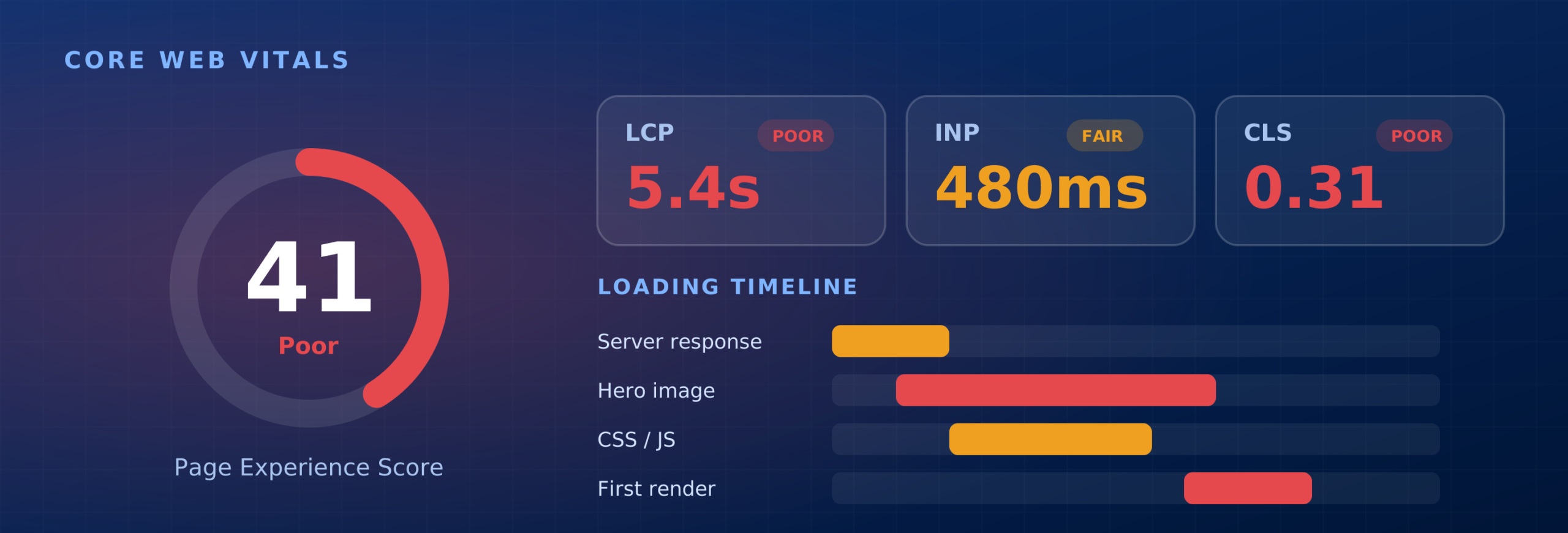

Want to understand what's affecting your own website's loading experience?
Get Your Free SEO Audit →A Structured Approach to Page Speed Optimization
Every website has a different technical setup. Our process starts with diagnosis and moves through targeted implementation and validation.
Performance Audit
Review speed metrics, page behavior, and technical performance issues.
Issue Diagnosis
Prioritize bottlenecks based on impact, complexity, and implementation needs.
Optimization
Implement relevant improvements to resources, scripts, caching, and rendering.
Testing & Validation
Re-test key pages and check for functionality or layout issues after changes.
Monitoring
Review performance trends and identify further improvement opportunities.
Optimization Backed by Performance Testing
We don't treat a single score as the whole story. Page speed should be evaluated through multiple metrics, real user experience data where available, and consistent testing.
We compare relevant measurements before and after implementation, review mobile and desktop behavior, and check that performance changes do not compromise website functionality.
Get a Free SEO Audit →Performance Measurement Areas
Page Speed Optimization FAQs
Answers to common questions about website speed, performance improvements, and Core Web Vitals.
Page speed optimization is the process of improving how quickly a website loads and responds to user interactions. It involves optimizing images, scripts, stylesheets, caching, server response, and other technical elements.
Page experience and Core Web Vitals are part of Google's broader page experience considerations. A faster, more responsive website can also make content easier to access and improve the overall experience for visitors. Speed alone does not guarantee higher rankings.
Core Web Vitals are Google's user experience metrics covering loading performance, interactivity, and visual stability. Their current key metrics are Largest Contentful Paint (LCP), Interaction to Next Paint (INP), and Cumulative Layout Shift (CLS).
The timeline depends on website size, hosting infrastructure, CMS, existing technical issues, and the complexity of required changes. A focused audit can identify priorities first, after which implementation time can be estimated more accurately.
Yes. WordPress and Elementor websites can be reviewed for image delivery, plugin overhead, CSS and JavaScript execution, caching, hosting response, and page-specific rendering issues. The exact improvements depend on the site's configuration.
No. A 100 score cannot be guaranteed across every page, device, and testing environment. Our focus is on meaningful technical improvements, good Core Web Vitals, and a better experience for real visitors.
Yes. We evaluate both mobile and desktop experiences because their resource conditions, rendering behavior, and performance results can differ. Mobile performance receives particular attention during optimization.
Ready to Build a Faster Website?
Let's identify what's slowing your website down and create a practical optimization plan focused on loading performance, Core Web Vitals, and a smoother user experience.
No-obligation website overview · Practical technical recommendations