
Table of Contents
Table of Contents
Share This Post
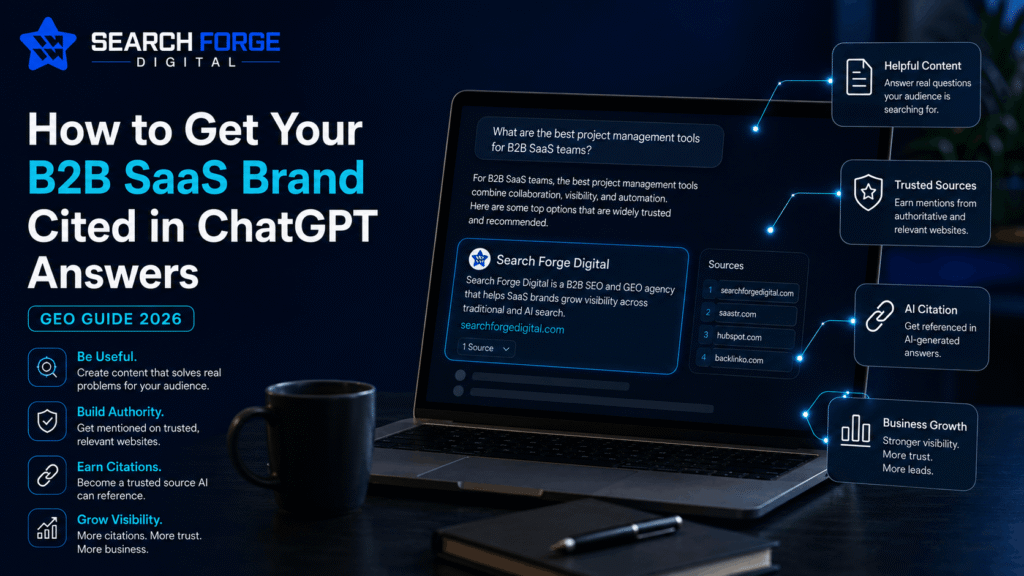
Google search is no longer the only game. Your buyers who once searched Google for things like “best CRM for startups” are now asking ChatGPT, Perplexity, or Claude questions such as: “What are the top 5 tools for my category?” or “X vs Y which one is better for our team?”
And if your brand isn’t appearing in those answers, you’re missing a major part of the buying conversation no matter how good your product is.
This discipline is commonly referred to as GEO (Generative Engine Optimization) or AEO (Answer Engine Optimization). This guide will walk you through how to increase the chances of your B2B SaaS brand being mentioned and cited in AI-generated answers.
1. First Understand: Ranking vs. Citation
In traditional SEO, you compete for rankings and links. The goal is to appear in search results and get users to click through to your website.
GEO works differently. An AI engine may mention your brand directly in an answer, use your data point, or reference your comparison page. The user may never click your website — but your brand has already entered the conversation.
That makes citations particularly valuable because they can appear at the exact moment when a buyer is researching options and building a shortlist.
2. Start With a Diagnostic
Before changing anything, establish your current baseline.
Ask ChatGPT questions such as:
- “What are the top 5 tools in [your category]?”
- “[Your product] vs. [competitor] — which is better for [specific use case]?”
- “What are the best SaaS platforms for [specific audience]?”
- “What should a [specific type of business] look for when choosing [your category] software?”
If your brand is missing or incorrect information about your company is being cited you have a clear starting point.
You also need to identify which third-party sources are influencing the information AI systems are using about your brand.
3. Make Your Content Easy for AI Systems to Extract
LLMs don’t need your content to sound complicated. They need information that is clear, specific, structured, and verifiable.
What should you do?
- Give a direct answer within the first 60–100 words instead of starting with a long introduction.
- Use bullet points, comparison tables, and FAQ-style Q&A sections.
- Answer the actual questions your buyers ask AI systems.
- Write naturally around complete questions instead of stuffing awkward exact-match keywords into headings.
- Keep important facts close to the sections where they are explained.
- Clearly identify products, features, pricing, use cases, limitations, and target audiences.
For example, instead of writing:
“SaaS MVP cost”
Build a useful question around the real search intent:
“How much does it cost to build a SaaS MVP in 2026?”
That gives both users and AI systems a clear question-and-answer structure.
Technical Layer
Use appropriate structured data such as Article, Organization, Product, SoftwareApplication, BreadcrumbList, and other relevant schema types where they accurately describe the page.
Don’t add schema simply because you think more markup automatically means more AI citations. Schema helps machines understand content; it does not guarantee that ChatGPT or another AI system will cite you.
Also make sure important pages can be crawled and indexed by the search systems you want to reach. Blocking relevant crawlers can obviously limit discoverability.
4. Original Data Is One of Your Strongest Assets
A page that simply summarizes information already available across hundreds of websites gives AI systems little reason to treat it as a unique source.
Original research is different.
If your SaaS company has access to:
- Customer usage data
- Industry benchmarks
- Internal performance data
- Original surveys
- Product adoption statistics
- Pricing research
- Market research
- Proprietary experiments
turn that information into publishable resources.
For example:
2026 SaaS Customer Support Response-Time Benchmark Report
is much more distinctive than another generic article titled:
What Is SaaS Customer Support?
But there’s one non-negotiable rule: never manufacture statistics.
If a number is estimated, label it as an estimate. If it comes from a survey, explain the sample size and methodology. If it comes from your own customer data, explain what the dataset represents.
Credibility is much harder to rebuild after publishing misleading data.
5. Build a Genuine Third-Party Presence
This is where many SaaS companies make mistakes.
They publish hundreds of pages on their own domain but barely exist anywhere else.
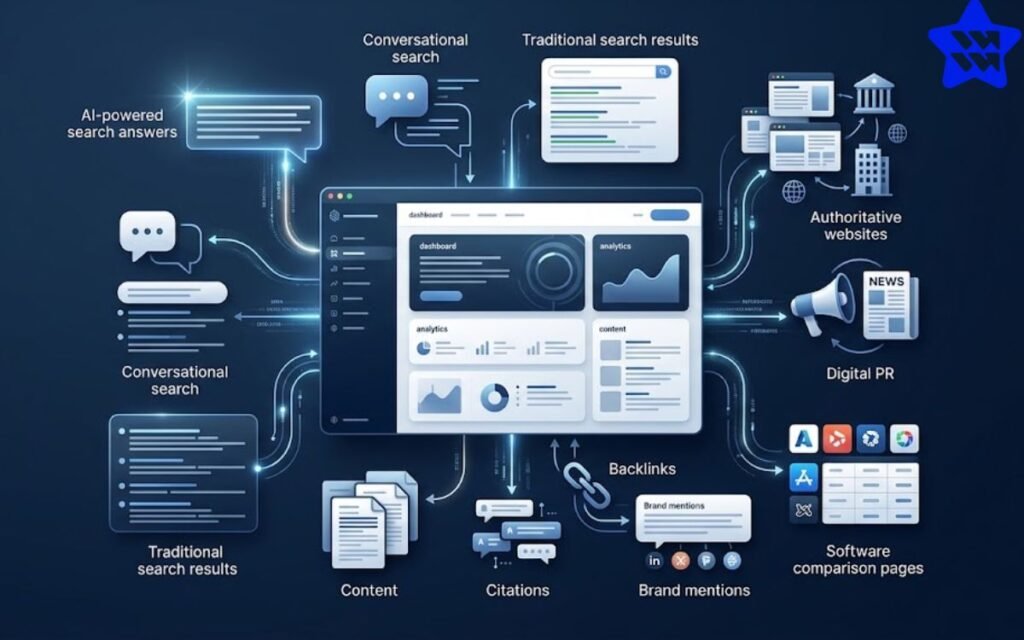
AI systems can encounter information about your company through many different sources, including:
- Review platforms
- Industry publications
- Expert interviews
- Independent comparison articles
- Reddit discussions
- Community forums
- Niche publications
- Podcasts
- Research reports
- News coverage
- Relevant partner websites
For review platforms such as G2 and Capterra, focus on building genuine customer reviews rather than trying to manufacture a reputation.
Fresh, detailed reviews can provide useful evidence about what customers actually think about your product.
For communities such as Reddit and niche forums, don’t spam your homepage or manufacture discussions. Participate where your expertise genuinely adds value.
The objective isn’t to create fake mentions.
The objective is to create a real, distributed footprint of useful information about your brand.
6. Optimize Alternative and Comparison Pages
One of the most commercially valuable types of AI queries is comparison intent.
Buyers ask questions like:
- “What are the best alternatives to X?”
- “X vs. Y — which is better?”
- “What is the best alternative to X for small businesses?”
- “Which tool is better for enterprise teams?”
- “What are the cheaper alternatives to X?”
If your SaaS product competes in an established category, create genuinely useful comparison pages.
Don’t turn them into thin sales pages.
Explain:
- Where your product performs better
- Where the competitor may be stronger
- Pricing differences
- Key features
- Integrations
- Ideal customer profiles
- Limitations
- Switching considerations
And be honest about where your product isn’t the best fit.
That makes the page more useful to buyers and more credible as an informational resource.
7. Build a “Source Stack”
Don’t depend on a single page to establish your brand’s authority.
Instead, create a connected source stack around important topics.
A strong SaaS source stack could include:
- Your canonical pillar guide — the definitive resource on the topic.
- Structured comparison pages against major competitors.
- An original research or benchmark report.
- Supporting educational content answering specific buyer questions.
- A strong third-party presence across relevant publications, reviews, and communities.
- Consistent company information across important profiles and directories.
The idea is simple:
If multiple independent sources consistently describe your company, product, expertise, and category in similar ways, there is more evidence available for systems trying to understand your brand.
8. Measure More Than Referral Traffic
AI visibility is difficult to measure using traditional analytics alone.
A buyer might discover your brand through an AI answer, remember the name, and later:
- Search your brand on Google
- Type your URL directly
- Ask a colleague about it
- Visit your website from another device
- Search for reviews
- Return through a branded search
That journey may never appear in your analytics as “ChatGPT referral.”
So don’t use referral traffic as your only GEO KPI.
Create a recurring prompt-testing process instead.
Track things such as:
| Metric | What to Track |
| Brand Presence | How often your brand appears in relevant AI answers |
| Citation Presence | How often your website or content is referenced |
| Competitor Visibility | Which competitors appear instead |
| Source Patterns | Which websites AI systems repeatedly reference |
| Accuracy | Whether the information about your brand is correct |
| Commercial Intent | Whether you appear for high-value buyer queries |
Run the same prompt set regularly so you can compare changes over time.
9. A Simple 30-Day Action Plan
| Week | Focus |
| Week 1 | Run 15–20 buyer-intent prompts and document your current brand visibility, competitors, citations, and information gaps. |
| Week 2 | Restructure your top 3–5 pages with clearer answers, comparison tables, FAQs, supporting evidence, and appropriate structured data. |
| Week 3 | Publish one original research or benchmark asset and start building genuine third-party visibility through reviews, communities, partnerships, and relevant publications. |
| Week 4 | Repeat the diagnostic prompts, compare the results, identify new gaps, and plan the next optimization cycle. |
How Search Forge Digital Can Help
Getting cited in AI answers isn’t just about publishing more blog posts. You need the right combination of content structure, authority, relevant third-party mentions, digital PR, and high-quality backlinks.
This is where Search Forge Digital can help.
We help SaaS companies and businesses strengthen their off-page authority through strategic link building, relevant editorial placements, and digital PR designed to build a stronger online presence.
The goal isn’t to create random backlinks or mass-produce mentions.
It’s to place your brand in relevant, authoritative environments where search engines, AI systems, prospects, and industry audiences can discover consistent information about your company.
If your website already has strong content but lacks the authority and third-party visibility needed to compete, an off-page strategy can be the missing piece.
Final Thoughts
GEO isn’t a one-time trick.
There is no secret prompt, schema tag, or backlink package that guarantees ChatGPT will cite your company.
It’s an ongoing process of making your brand easy to understand, easy to verify, and consistently visible across trustworthy sources.
The companies most likely to benefit from AI search aren’t necessarily the ones publishing the most content.
They’re the ones building the strongest combination of:
- Clear and structured content
- Original information
- Demonstrable expertise
- Consistent brand information
- Genuine customer reviews
- Relevant third-party mentions
- Authoritative digital PR
- Strong editorial backlinks
The earlier you start building that footprint, the more opportunities you create for your brand to become part of the conversation when buyers ask AI systems what they should buy.
Want to Improve Your Brand’s AI Search Visibility?
If your brand is not consistently appearing when potential customers ask ChatGPT, Gemini, Perplexity, or other AI systems about your category, it is worth finding out why.
Search Forge Digital can help you identify visibility gaps and strengthen the SEO, authority, digital PR, and third-party signals supporting your brand.
Learn more about Search Forge Digital’s SEO services →
Comments
Related posts
AI SEO, SaaS, SEO
September 4, 2026
AI SEO, SEO
September 3, 2026