

Most B2B companies do not have a traffic problem. They have a pipeline problem.
I see it all the time. A SaaS team shows me a dashboard, with impressions, clicks and followers. Then admits that sales still struggles to find qualified conversations.
Marketing is busy. Revenue is not moving.
That gap is what good B2B digital marketing services should close. In this guide I will walk through what these services include what to look for when hiring a partner and how search has changed now that buyers ask ChatGPT and Perplexity questions before they ever open Google.
What Are B2B Digital Marketing Services?
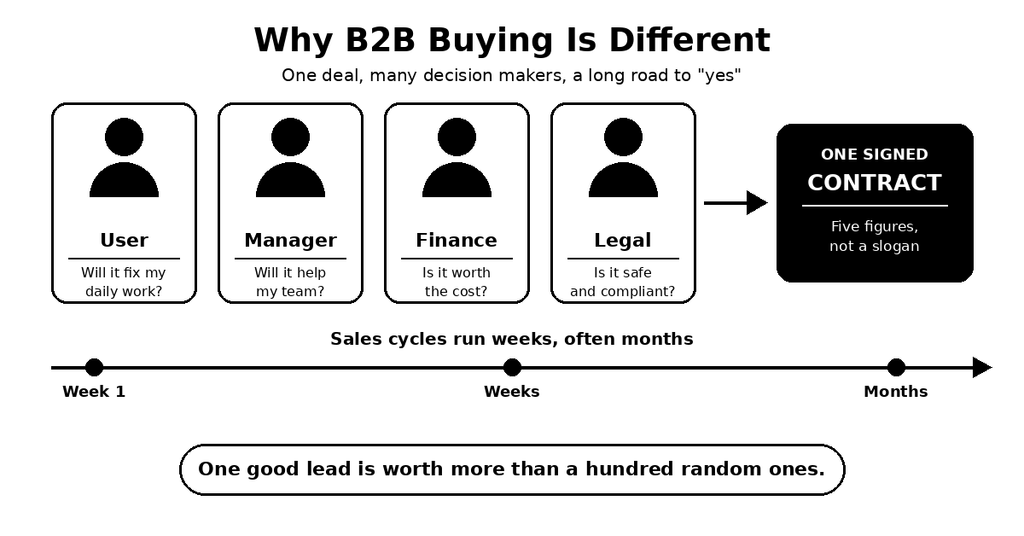
B2B digital marketing services are the channels, content and systems that a business uses to attract, educate and convert businesses online. The key word is business. I know you are not selling to one person with a credit card. I also know you are selling to a buying group.
That changes everything:
- Sales cycles are longer. Weeks, often months.
- Several people decide. A user, a manager, a finance lead and sometimes legal.
- Trust matters more than hype. Nobody signs a five-figure contract because of a clever slogan.
- Deals are bigger. So one good lead is worth far more than a hundred random ones.
So B2B marketing isn’t about shouting louder. It’s about being the most credible, most findable answer when a buyer is researching a problem.
The Core Services You’ll Actually Need
Agencies love long service menus. In practice, most B2B growth comes from a handful of things done well.

1. B2B SEO
Search engine optimisation is still the backbone. When a buyer types “best project management software for construction” or “how to reduce customer churn in SaaS”, you want to appear.
Good B2B SEO goes beyond keywords. It covers:
- Technical health (speed, crawlability, clean site structure)
- Content built around real buyer questions, not just high-volume terms
- Pages for each stage of the journey: problem, solution, comparison and decision
- Authority building through quality mentions and links
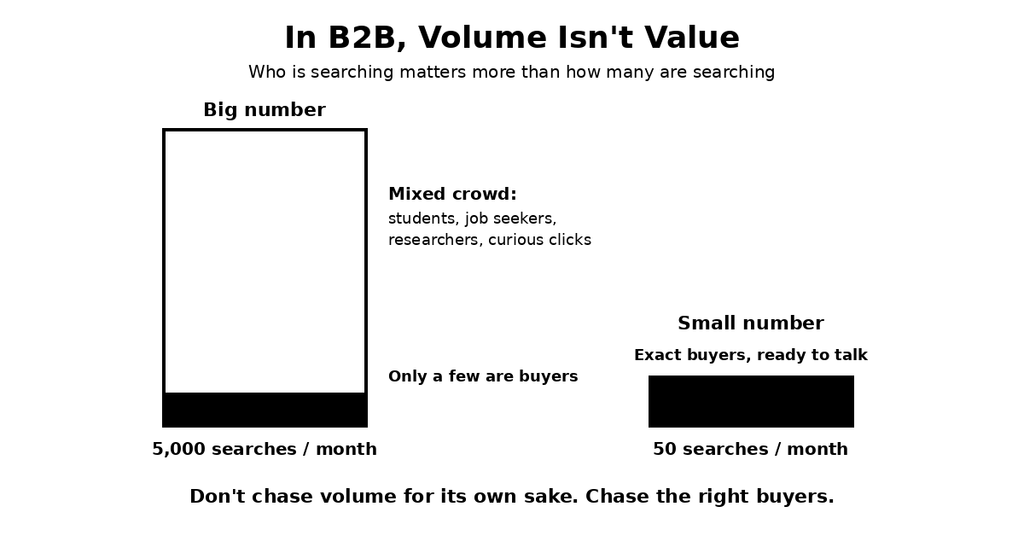
One honest note: in B2B, a keyword with 50 searches a month can be worth more than one with 5,000, if the people searching are the exact buyers you want. Don’t chase volume for its own sake.
2. Content Marketing
Content is where trust gets built. Case studies, in-depth guides, comparison pages and original insight all do the heavy lifting.
The best B2B content shares something specific that only your team knows: a process, a mistake you learned from, a result you measured. Generic content is everywhere now, and both readers and search engines have learned to ignore it.
3. LinkedIn and Paid Media
LinkedIn remains the paid channel for targeting specific job titles and company sizes directly. Google Ads reaches people who are already searching and close, to making a decision.
Paid media should support efforts not replace them. Ads deliver results. SEO builds value over time. Using both together covers goals and long-term growth.
4. Email and Lead Nurturing
Most B2B buyers aren’t ready on their first visit. Email keeps you in the conversation until they are. A simple, helpful sequence will beat a flashy campaign almost every time.
5. Conversion Rate Optimisation (CRO)
If your site gets traffic but few demo requests, the fix often isn’t more traffic. It’s clearer messaging, better calls to action and fewer barriers on forms. Small changes here can lift results without increasing spend.
6. Analytics and Reporting
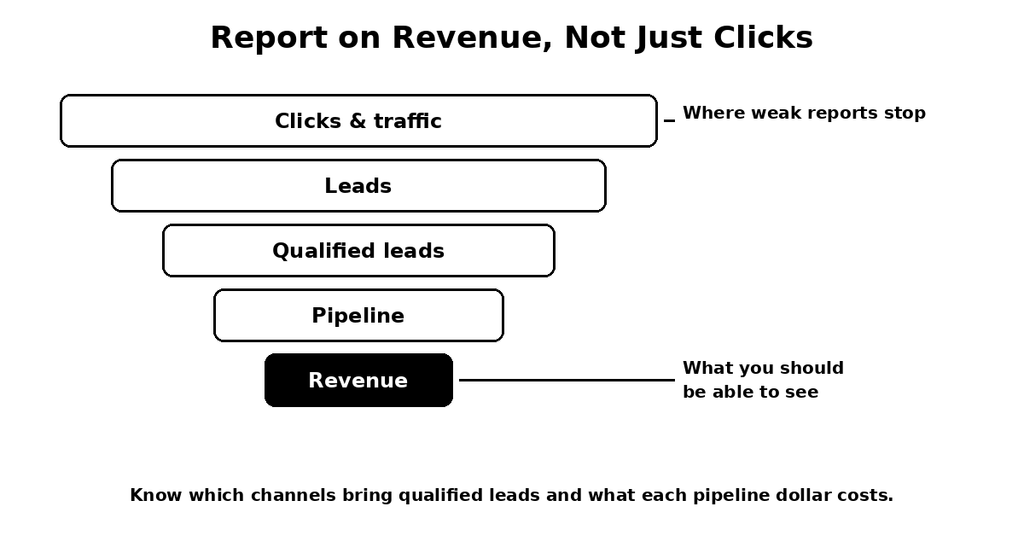
This is the part that connects strategy to revenue. You should know which channels bring qualified leads, which content influences deals, and what each pipeline dollar costs you. If a provider can only report on clicks, push back.
The Big Shift: Search Is No Longer Just Google
Here’s the change that most B2B teams are still catching up with.
Buyers now use AI tools to get recommendations. A founder in London might type, “What are the best tools for managing customer onboarding?” into ChatGPT. A procurement manager in Sydney might ask Perplexity to compare three vendors. Many of these users do not click through ten links. They read the answer. Choose from there.

If your brand is not mentioned in those answers you are invisible at the moment of consideration.
This has created two disciplines that exist next, to SEO.
GEO: Generative Engine Optimisation
GEO is the practice of making your brand more likely to be referenced and cited by generative AI tools such as ChatGPT, Perplexity, Gemini and Google’s AI Overviews.
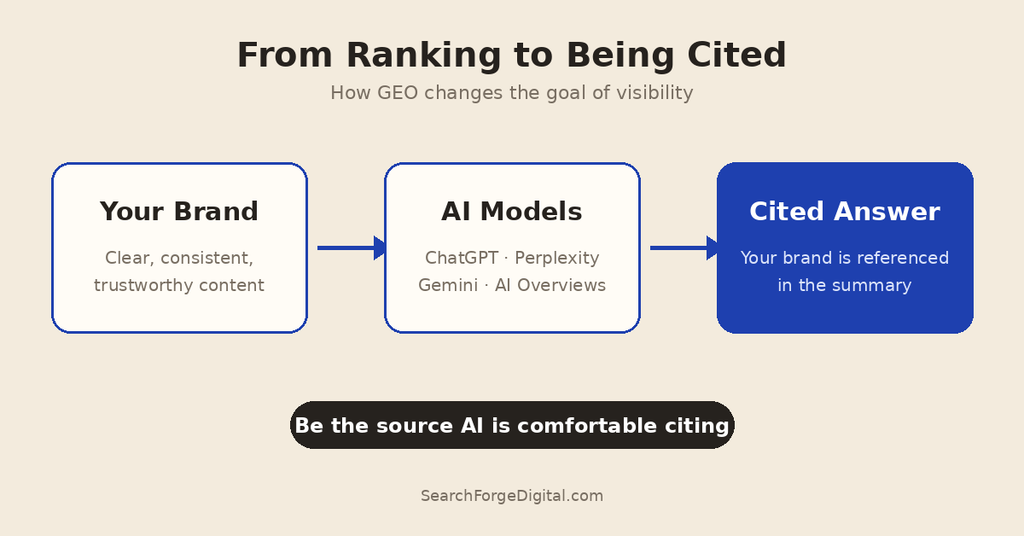
These systems don’t rank pages the way classic search does. They pull from sources they consider clear, consistent and trustworthy, then summarise. So GEO focuses on being the kind of source an AI model is comfortable citing.
AEO: Answer Engine Optimisation
AEO is about structuring your content so it directly answers questions. Think of featured snippets, “People also ask” boxes and voice or AI-generated answers.
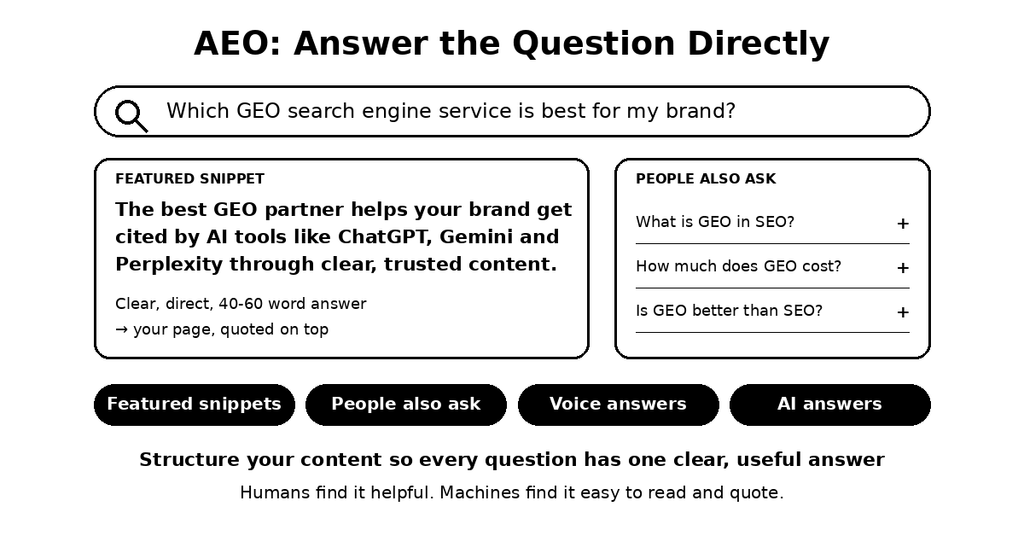
In simple terms: if a buyer asks a question, your page should contain the clearest, most useful answer to it, written in a way both humans and machines can easily understand.
Why this matters for SaaS in particular
SaaS buyers do a lot of research before talking to anyone. They compare features, read reviews and ask “X vs Y” questions. Those are precisely the queries AI tools answer all day long.

So a modern B2B digital marketing service shouldn’t treat AI visibility as a side project. It belongs in the strategy from day one.
What Helps AI Tools Mention Your Brand
Nobody can control what ChatGPT says, and anyone who promises guaranteed placement is overselling. But there are practical things that improve your chances.
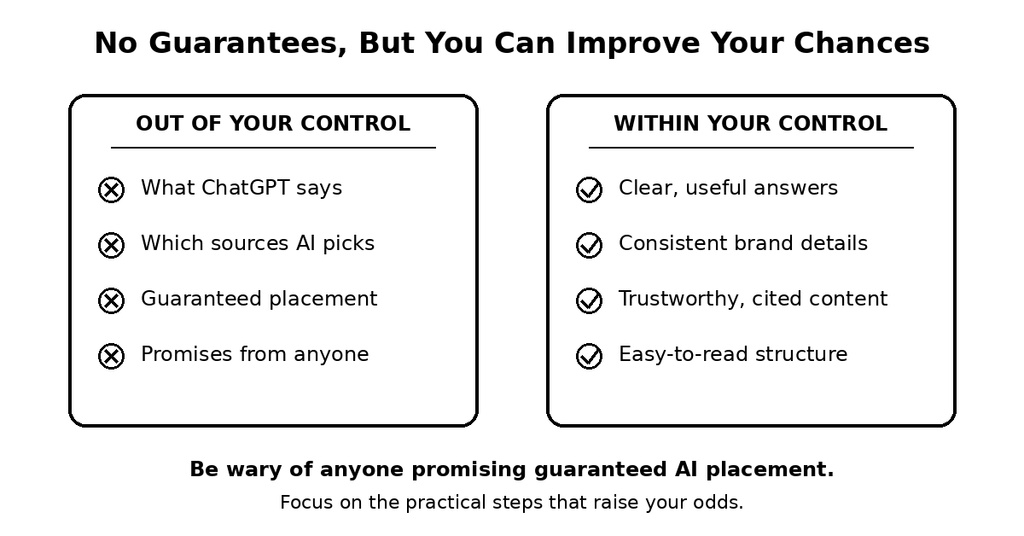
overselling. But there are practical things that improve your chances.
Be clear about who you are. Your website should state, plainly, what your product does, who it’s for and what problems it solves. Vague “innovative solutions” copy gives AI models nothing to work with.
Answer real questions. Build pages around the questions your buyers actually ask. Use clear headings, short direct answers near the top, then depth underneath.
Keep your brand information consistent. Your name, description, category and positioning should match across your website, LinkedIn, directories and review platforms. Inconsistency confuses both people and machines.
Earn mentions beyond your own site. Reviews, industry articles, podcasts, partner pages and credible publications all act as signals. AI tools learn about brands from the wider web, not only from what you say about yourself.
Use structured data. Schema markup helps search engines and AI systems understand your content, your organisation and your products more reliably.
Publish original insight. First-hand data, real examples and clear opinions are far more citable than a rewrite of what everyone else has said.
Monitor and adjust. Regularly test the questions your buyers would ask across ChatGPT, Perplexity, Gemini and Google, and note whether you appear, how you’re described and who shows up instead. It’s not perfect science, but it shows where the gaps are.
How to Choose a B2B Digital Marketing Partner

If you’re evaluating agencies or consultants, here’s what I’d look at.
1. Do they start with your revenue goal? A good partner asks about your sales process, average deal size and ideal customer before talking about tactics.
2. Do they understand your market? Selling SaaS to buyers in the US is different from selling into the UK, Australia or continental Europe. Language, buying habits, compliance expectations (GDPR, for instance) and even the way people phrase search queries vary.
3. Are they honest about timelines? SEO and content take time. Anyone promising top rankings in two weeks is guessing or cutting corners. A realistic expectation for meaningful organic momentum is several months, with early signals sooner.
4. Do they cover AI search? Ask directly how they approach GEO and AEO. If the answer is a blank stare, they may be behind.
5. How do they report? Look for reporting tied to qualified leads, pipeline and revenue influence, not just rankings and traffic.
6. Can they show real work? Ask for case studies, examples or references. Be wary of vague claims with no detail behind them.
Common Mistakes B2B Teams Make
After working across SEO, GEO and AEO, a few patterns come up again and again.
- Chasing traffic instead of buyers. More visitors aren’t useful if none of them can buy.
- Writing for search engines, not people. Stuffed, awkward content hurts trust.
- Ignoring the bottom of the funnel. Comparison pages, pricing explanations and “alternatives” pages convert, yet many brands skip them.
- Spreading too thin. Being on every channel with a weak presence is worse than owning two or three well.
- Treating AI search as a fad. It’s already changing how buyers research. Waiting costs you ground.
- No link between marketing and sales. If the two teams don’t share definitions of a “qualified lead”, reporting becomes meaningless.
A Simple Framework: From Strategy to Revenue

When I plan work for a SaaS brand, I keep it simple.
Step 1: Understand the buyer. Who are they, what are they trying to solve, and where do they look for answers, including AI tools?
Step 2: Build the foundation. Fix the website basics: clear messaging, fast performance, clean structure and proper tracking.
Step 3: Create content that earns trust. Focus on buyer questions, comparisons, use cases and proof.
Step 4: Expand visibility. Strengthen SEO, add AEO and GEO practices, and build authority across the wider web.
Step 5: Capture demand. Use paid channels, email and CRO to turn attention into conversations.
Step 6: Measure and refine. Track what produces qualified pipeline, then do more of that and less of the rest.
It isn’t flashy, but it works because every step points toward revenue rather than vanity numbers.
What to Expect in the First 90 Days
To keep expectations realistic, here’s roughly how it tends to unfold.
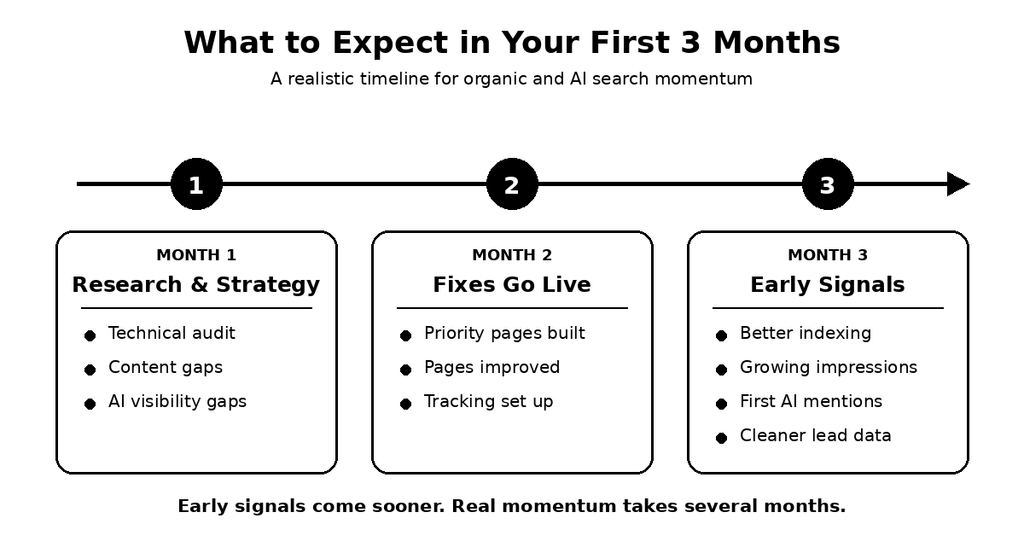
- Month 1: Research, audit and strategy. You’ll find technical issues, content gaps and AI visibility gaps.
- Month 2: Fixes go live. Priority pages get built or improved, and tracking is set up properly.
- Month 3: Early signals appear: better indexing, growing impressions, first mentions in AI answers for some queries, and cleaner data on lead quality.
Bigger results usually build from there. Timelines vary by competition, domain strength and budget, so treat any fixed promise with caution.
Final Thoughts
B2B digital marketing services are only worth paying for if they move the business forward. That means a clear strategy, content people trust, search visibility that includes AI platforms, and reporting that ties back to revenue.
The brands that will win over the next few years are the ones that show up everywhere their buyers look, whether that’s a Google results page, a ChatGPT answer or a Perplexity summary.
If you’re a SaaS company that wants to be found, trusted and mentioned in those places across the US, UK, Australia and Europe, that’s exactly the work we do at Search Forge Digital. We combine SEO, GEO and AEO into one practical plan built around your pipeline.
Want to see where your brand stands today? Get in touch for a free visibility review and we’ll show you where you appear, where you don’t, and what to fix first.


