


For years, law firms have treated search visibility as a Google problem. The objective was straightforward: identify valuable legal keywords, build authoritative pages, earn backlinks, improve rankings, and turn organic traffic into consultations. That model still matters in 2026, but it is no longer the entire search landscape.
Potential clients are increasingly asking AI systems questions that they previously searched on Google. Instead of opening several law firm websites and comparing them manually, someone may ask an AI assistant which personal injury attorney to consider, what type of lawyer they need, how a particular legal process works, or which firms serve a specific city. The answer may contain several recommendations, explanations, and citations without requiring the user to visit ten different search results.
That creates a different visibility problem for law firms. It is no longer enough to ask whether a firm ranks for a keyword. The more important question is whether the firm’s information is understandable, credible, discoverable, and citable across the sources that generative search systems use when constructing an answer.
This is where Generative Engine Optimization, or GEO, becomes relevant.
| Traditional Legal SEO | AI-Driven GEO — 2026 |
|---|---|
| Keywords | Entities and topics |
| Backlinks | Citations and trusted sources |
| Google rankings | AI-generated visibility |
| Website authority | Cross-platform entity authority |
| Ranking-focused content | Answer-focused content |
| Organic clicks | Visibility, mentions and citations |
The important point is that GEO does not replace SEO. A law firm that ignores technical SEO, indexing, site architecture, local visibility, content quality, and authority is not going to solve its search problem simply by adding the phrase “GEO” to its marketing strategy. GEO should be treated as an extension of a strong search foundation rather than a replacement for it.
What Is Generative Engine Optimization for Law Firms?
Generative Engine Optimization is the process of improving the way a brand, organization, or professional is represented and referenced in AI-generated search experiences.
For a law firm, that means making the firm’s expertise easier for search and generative systems to understand across its website and the wider web. The objective is not simply to make an AI mention a firm’s name. The stronger objective is to establish a consistent digital identity around the firm, its attorneys, practice areas, jurisdictions, experience, and supporting evidence.
This distinction matters because an AI-generated answer is usually not created from a single webpage. Generative engines can synthesize information from multiple sources and produce a response based on what they retrieve and consider relevant. The original GEO research introduced this concept as a new optimization framework for improving visibility in generative-engine responses. In its experiments, the researchers reported that selected optimization methods could increase visibility by up to 40%, while also showing that the effectiveness of different methods varied by domain.
That does not mean every law firm can increase its AI visibility by 40%. It would be misleading to make that claim. The research demonstrates that optimization can affect generative-engine visibility under the study’s methodology; it does not provide a guaranteed percentage for law firms.
The same applies to statistics. The study evaluated techniques including adding relevant statistics, quotations, and other forms of information enrichment. The useful lesson for legal marketing is not that a specific percentage automatically produces a specific visibility gain. The practical lesson is that evidence-rich information can make content more useful and potentially more visible within generative responses when it is relevant and properly presented.
Why Legal Search Is Changing
Legal search has always been different from many other industries because users are often dealing with high-stakes decisions. A person looking for a lawyer may not simply search a short commercial keyword such as “lawyer.” They may search a detailed question about an accident, employment dispute, immigration issue, family-law matter, criminal charge, business dispute, or another situation.
These searches are naturally conversational.
A potential client may ask, “What should I do after a workplace injury in California?” or “How long do I have to file a personal injury claim?” They may then follow that question with, “What type of lawyer should I hire?” An AI interface can answer those questions in a conversational format, making the user’s journey different from the traditional process of clicking through multiple search results.
This does not mean Google Search has disappeared. It means law firms need to understand both environments.
Google still depends heavily on crawlable, indexable, useful content and established search signals. Google itself states that structured data can help its systems understand content, while also making clear that structured data does not guarantee a ranking or enhanced search appearance.
The same principle should guide GEO: there is no magic markup, single keyword, or one-time optimization that guarantees an AI recommendation.
The First Foundation: Build a Strong Legal Entity
One of the biggest differences between conventional keyword optimization and GEO is the importance of entities.
A law firm is not simply a collection of webpages targeting keywords. It is an organization with a name, attorneys, locations, practice areas, professional credentials, legal specialties, publications, reviews, directory profiles, and relationships with other entities.
If those details are inconsistent across the web, the firm becomes harder to understand as a single entity.
Imagine a law firm whose website uses one version of its name, a legal directory uses another, an attorney profile lists a different office address, and several third-party profiles describe different practice areas. Even if each individual listing looks acceptable, the overall digital footprint becomes fragmented.
Legal GEO therefore begins with entity consistency.
The firm’s official name, attorneys, locations, phone numbers, practice areas, professional biographies, and other important information should be accurate and consistent across relevant sources. Attorney profiles should clearly connect individual lawyers with the firm. Practice-area pages should clearly establish what the firm actually handles and where those services are offered.
This is not about manipulating AI systems. It is about reducing ambiguity.
Step 1: Entity Scaffolding
Entity scaffolding is the process of creating a clear digital structure around the firm and its people.
A strong law-firm entity structure connects the firm with its attorneys, locations, practice areas, professional organizations, publications, legal directories, and other trustworthy references. The goal is to make the relationship between these entities understandable.
For example, a personal injury attorney should not only have a biography on the firm’s website. Their professional identity should also be represented consistently across relevant professional and legal platforms. Their practice areas, jurisdiction, firm affiliation, and experience should not contradict one another.
This becomes especially important for firms operating in multiple cities or jurisdictions. Location should not be treated as a keyword inserted into dozens of nearly identical pages. Each location should have genuine information about the services available there, relevant legal context, attorneys serving the area, and other useful details.
The result is a more coherent digital footprint that can support both traditional search and AI-driven discovery.
Step 2: Legal Schema Markup
Structured data is another part of the technical foundation.
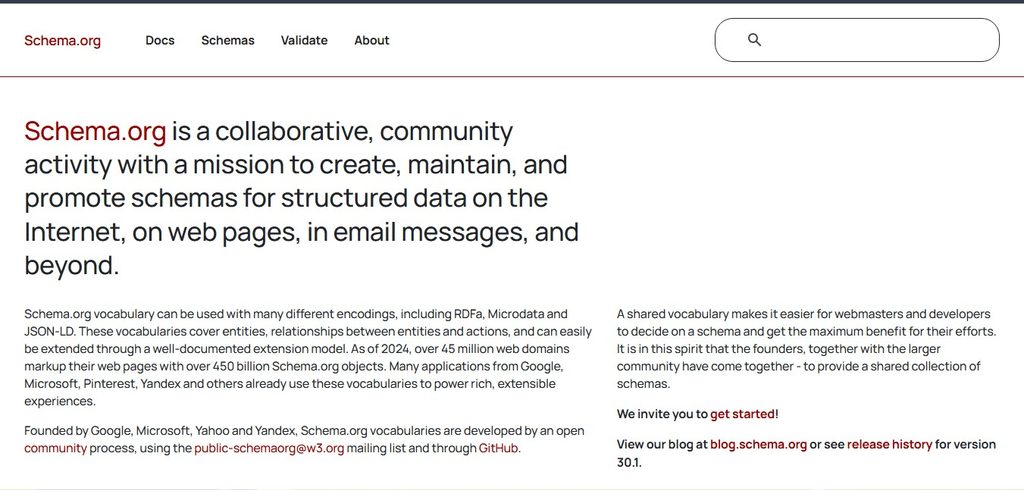
Schema.org includes a Legal Service type specifically for businesses providing legal services, including law firms. It can be used within a broader structured-data implementation to describe relevant information about a legal business.
Depending on the website architecture, relevant entities can include the firm, attorneys, organization details, locations, and other appropriate relationships. Person and Organization are also established Schema.org types that can help represent people and organizations in machine-readable form.
But there is an important distinction that many SEO agencies get wrong.
Schema is not a secret GEO ranking switch.
Google explicitly says structured data by itself is not a generic ranking factor and does not guarantee enhanced search visibility. Its primary value is helping systems understand the content and potentially making pages eligible for supported search features.
For law firms, schema should therefore support the information already visible and accurately represented on the page. It should not be used to create claims that the visible content cannot support.
Step 3: Citation Gap Analysis

Once the firm’s entity foundation is in place, the next question is simple: what does AI actually use when answering relevant legal questions?
This is where citation gap analysis becomes useful.
Instead of assuming what AI systems cite, a GEO audit can test a defined set of queries across relevant AI search experiences and record the sources appearing in the answers. The analysis can identify which legal directories, government resources, professional organizations, publications, law firm websites, and other sources repeatedly appear.
The firm can then compare its own digital presence with those sources.
This approach is more useful than simply asking an AI, “Is my law firm visible?” AI-generated responses can vary between runs, so one isolated query is not enough to establish a reliable visibility measurement.
A 2026 InterCore study illustrates why this measurement matters. Its researchers tested 540 high-intent legal queries across six practice areas and 30 U.S. metros, running each query three times for a total of 1,620 answers and 18,900 citations. In that particular study, a legal directory was the first cited source in 77.8% of the valid answers. The study also reported that at least 51.8% of all citations went to legal directories, while individual law-firm websites represented a much smaller identifiable share.
That is useful evidence, but it needs context.
The study focused on U.S. high-intent lawyer-hiring queries and used Perplexity Sonar. It should not be treated as proof that every AI engine, country, legal market, or practice area behaves identically. Other 2026 research has produced different results in other markets. For example, a UK solicitor study reported that individual law-firm websites accounted for 74.1% of the citations in its sample, while legal directories and review platforms accounted for 17.2%.
The lesson is not that one number is universally correct. The lesson is that citation behavior depends on the market, query set, engine, and methodology.
That is exactly why law firms should conduct their own visibility analysis rather than blindly copying a generic GEO checklist.
Step 4: Build Evidence-Rich Legal Content
Legal content needs evidence.
Generic articles such as “What Is Personal Injury Law?” are easy to produce and difficult to differentiate. A law firm’s content becomes more useful when it answers specific questions with relevant legal authority, jurisdictional context, statistics where appropriate, government sources, court resources, regulations, and clearly attributed expert commentary.
This is particularly important because legal information can have real consequences. An article should not present uncertain legal information as universal truth when the answer depends on jurisdiction, facts, deadlines, or changing regulations.
A strong GEO-focused legal article might explain a legal issue, identify the jurisdiction, cite an authoritative source, explain exceptions, and make it clear when professional legal advice is appropriate.
The goal is not to stuff every article with citations simply because citations sound authoritative. The sources need to support the actual claims being made.
That distinction is important for AI visibility because a page containing ten irrelevant statistics is not automatically more trustworthy than a page containing two highly relevant, verifiable sources.
Step 5: Create Practice-Area Authority
A law firm’s website should make its expertise obvious.

If a firm handles personal injury, employment law, family law, immigration, criminal defense, medical malpractice, or another practice area, the website should develop meaningful topical depth around that area.
That does not mean publishing hundreds of shallow pages.
It means building a logical content ecosystem.
A primary practice-area page can explain the firm’s service. Supporting pages can answer specific client questions. More detailed articles can address legal procedures, common misconceptions, jurisdiction-specific issues, relevant regulations, and practical next steps. Attorney biographies can demonstrate who handles the work. Relevant external sources can support important legal claims.
Over time, these pages create a stronger relationship between the firm’s entity and the subjects it claims to understand.
This is where GEO and traditional SEO overlap significantly. Search engines still need useful, accessible content, and AI systems also need information they can interpret and use.
Google’s current Search Essentials similarly emphasizes helpful, reliable, people-first content rather than content created simply to manipulate search results.
Legal Directories Matter, But They Are Not the Whole Strategy
The 2026 legal AI research makes directories difficult to ignore.
If a law firm appears accurately and consistently in reputable legal directories, those profiles can contribute to the firm’s broader digital presence. The InterCore study found strong directory representation in its U.S. sample, while other studies have found significant directory citation activity in specific legal-query datasets.
But treating directories as the entire GEO strategy would be another mistake.
A directory profile cannot compensate for a weak website, inconsistent attorney information, poor content, unclear practice areas, technical problems, or unsupported claims.
The better approach is to think in terms of an authority network.
The firm’s website represents the primary entity. Attorney profiles support the people behind the firm. Legal directories provide third-party references. Professional organizations and relevant publications can provide additional context. Government and legal resources support factual claims. The stronger these relationships are, the easier it becomes to build a consistent digital representation of the firm.
GEO Is Not About Writing for Robots
One of the fastest ways to damage a GEO strategy is to start writing content that sounds like it was designed for an AI crawler instead of a person.
Law firms should not fill pages with awkward repetitions of phrases such as “best personal injury lawyer,” “personal injury attorney near me,” or “AI legal search optimization.” That is not sophisticated GEO. It is old-fashioned keyword stuffing wearing a new label.
The best legal content still needs to sound like it was written for a person who has an actual problem.
A potential client should be able to understand the answer quickly. The content should explain complicated concepts clearly, use appropriate terminology, provide evidence, acknowledge limitations, and avoid exaggerated promises.
If the content is genuinely useful to a human reader, it has a much stronger foundation for being useful to search systems as well.
How Law Firms Can Measure GEO Performance
Traditional SEO provides familiar metrics such as rankings, impressions, clicks, organic traffic, conversions, and backlinks.

GEO requires additional measurements.
A law firm can monitor how frequently it is mentioned in defined AI queries, whether its website or third-party profiles are cited, which competitors are repeatedly appearing, which sources AI systems rely on, and whether the firm appears consistently across repeated tests.
The important word is consistently.
AI-generated answers are not fixed rankings. The same question can produce different responses at different times. That means a single successful answer does not prove that a firm has established durable AI visibility.
A better measurement system uses a fixed query set, records results over time, tracks citations and mentions, and separates the firm’s own website from third-party sources.
For example, a firm might track questions around its major practice areas, locations, client situations, and attorney expertise. Over time, the firm can identify whether its visibility is expanding, disappearing, or remaining concentrated in only a few queries.
That creates something much more useful than a vague “AI score.”
How Search Forge Digital Could Execute a Legal GEO Strategy
For a law firm working with Search Forge Digital, the process should begin with an audit rather than a generic package of GEO tactics.
The first stage would examine the firm’s technical SEO foundation, indexability, site structure, practice-area architecture, attorney pages, location pages, internal linking, existing authority signals, and content quality.
The second stage would map the firm’s digital entities. This means identifying the firm, attorneys, offices, practice areas, jurisdictions, professional profiles, and important third-party references, then looking for inconsistencies or missing relationships.
The third stage would involve AI visibility testing. Relevant legal queries would be created around the firm’s actual services and locations. Results would be recorded across selected generative search environments, with particular attention to which firms and sources appear repeatedly.
The fourth stage would focus on the citation gap. If competitors are being referenced through particular directories, publications, professional resources, or other authoritative sources, the firm can investigate whether it has an equivalent and accurate presence where appropriate.
The fifth stage would focus on content. Instead of publishing generic blog posts simply to increase page count, the strategy would prioritize questions and topics that demonstrate genuine practice-area expertise. Each important claim should be supported appropriately, especially when discussing legal rules, statistics, deadlines, or jurisdiction-specific requirements.
Finally, the strategy should be measured continuously.
There should be no fake case study and no invented percentage promising that every law firm will receive a specific increase in AI recommendations. Search visibility is affected by many variables, and responsible GEO marketing should report observed changes rather than manufacture results.
The Future of Legal Search Is Not SEO Versus GEO
The biggest mistake a law firm can make is treating GEO as a replacement for SEO.
It is not.
Technical SEO still determines whether important pages can be discovered and understood. Content still needs to answer real questions. Websites still need clear architecture. Law firms still need credible authority. Local and professional visibility still matter.
GEO adds another layer: how that information is represented when an AI system synthesizes an answer for a potential client.
The strongest legal search strategy in 2026 therefore combines both approaches.
SEO helps build the searchable foundation. Entity optimization helps clarify who the firm is. Structured data helps communicate machine-readable information. Evidence-rich content demonstrates expertise. Third-party sources create additional context. Citation analysis reveals how AI systems currently construct answers. Continuous testing shows whether the firm’s visibility is changing.
That is a more realistic way to approach generative search.
Final Takeaway
AI search has changed the question law firms need to ask.
It is no longer enough to ask, “What position does my website have on Google?”
The broader question is, “When a potential client asks an AI system about the legal problem I solve, what information will that system find, which sources will it trust, and is my firm represented accurately within that information?”
GEO provides a framework for addressing that question.
For law firms, the strategy starts with fundamentals: a technically sound website, clear entity information, consistent attorney and firm profiles, accurate structured data, authoritative legal content, relevant third-party references, and ongoing measurement of AI-generated visibility.
The objective is not to trick an AI into recommending a firm.
The objective is to build such a clear, credible, evidence-supported digital presence that the firm has a legitimate chance of being understood, referenced, and surfaced when relevant legal questions are asked.
In 2026, that is what legal search visibility increasingly looks like.


