

Table of Contents
Table of Contents
Share This Post
SEO is often treated like a switch: a business hires an SEO company, starts publishing content, builds some links, and expects traffic to increase.
That is not how it works.
SEO is a long-term investment. It can become one of the most valuable sources of customers for a business, but only when the business is actually ready to invest in it.
The real question in 2026 is not simply, Do I need SEO?
The better question is:
Is my business at the stage where SEO can produce a meaningful return?
For some businesses, the answer is yes. For others, spending heavily on SEO right now would be a waste of money.
SEO Is an Investment, Not a Quick Advertising Campaign
Paid advertising can generate visibility almost immediately. SEO usually works differently.
You invest time and money into improving your website’s visibility, authority, content, and relevance. The results can take weeks or months to become clear, depending on the competition, website history, industry, and work being done.
Google itself notes that some SEO changes can take weeks or even several months to show their impact in Search.
That means SEO makes more sense for businesses that are prepared to build an asset over time rather than expecting instant leads.
If you need customers tomorrow and have no other marketing channel, SEO alone is probably not your answer.
If you want to build a consistent source of organic traffic over the next 6–24 months, the situation is very different.
7 Signs Your Business Is Ready to Invest in SEO
1. Your Customers Are Already Searching for What You Sell
This is probably the most important signal.
If potential customers search Google for your services, products, solutions, or problems related to your business, SEO can be valuable.
For example, a company selling commercial software may target searches related to software comparisons, business solutions, pricing, features, and specific problems.
But if almost nobody searches for your product because the market is extremely new, SEO may not be your first priority.
You need existing search demand—or a realistic opportunity to create it.
2. Your Business Has a Clear Offer
SEO cannot fix a confusing business.
If visitors reach your website and cannot understand:
- What you sell
- Who you help
- Why they should choose you
- What makes your offer different
- How to contact or buy from you
then generating more traffic will not solve the underlying problem.
You will simply have more people visiting a website that does not convert.
Before increasing SEO investment, make sure the business itself has a clear proposition.
3. You Have Enough Margin to Support Long-Term Marketing
This is where many small businesses get SEO wrong.
If your average customer is worth $100 and your SEO investment is $2,000 per month, you need a realistic path to recovering that investment.
On the other hand, if one new customer can generate thousands of dollars in revenue, spending several thousand dollars to build organic visibility may make much more sense.
SEO economics depend heavily on:
Customer value × conversion rate × qualified organic traffic
Not simply rankings.
A business should understand its numbers before deciding how much to spend.
4. Your Competitors Are Already Winning Search Traffic
Search your main commercial terms.
If competitors consistently appear above you, that is useful information.
It means there is already a proven market in search.
You can examine:
- Which pages attract traffic
- What topics competitors cover
- Which websites mention them
- Where they have earned backlinks
- What keywords bring commercial visitors
- Which content appears to generate engagement
You do not need to copy competitors.
You need to understand what the market is already rewarding and identify where your business can compete.
5. You Are Prepared to Wait for Compounding Results
SEO becomes much more attractive when a business thinks beyond the next 30 days.
A strong page can continue attracting visitors long after it is published.
A useful industry resource can earn links and references.
A strong brand can accumulate authority over time.
That compounding effect is one of SEO’s biggest advantages over advertising.
But it requires patience.
If your business will cancel the campaign after four weeks because rankings have not dramatically changed, do not invest heavily in SEO yet.
6. Your Website Has Something Worth Promoting
This is often overlooked.
SEO cannot manufacture value that does not exist.
A business needs useful products, services, information, expertise, case studies, research, experience, or something genuinely useful to its audience.
Google’s current guidance emphasizes original, useful, people-first content rather than content created primarily to manipulate rankings.
That becomes even more important as AI makes generic content extremely easy to produce.
The businesses that stand out will have something real behind their content.
7. You Want to Reduce Dependence on Paid Traffic
Paid advertising can be excellent.
But relying entirely on paid traffic can become expensive, especially in competitive industries.
SEO gives businesses another acquisition channel.
The objective should not necessarily be to replace advertising.
A stronger strategy can be to build several acquisition channels so the business is not dependent on one source of customers.
SEO Investment Check
SEO is probably worth considering if:
✓ Your customers actively search for your products or services
✓ Your competitors are already gaining organic visibility
✓ Your business has healthy customer margins
✓ You can wait several months for meaningful results
✓ Your website offers something genuinely valuable
✓ You have a clear conversion path
✓ You are willing to invest consistently rather than randomly
SEO may NOT be your priority if:
✗ You need immediate sales within days
✗ Nobody is searching for your category yet
✗ Your offer is unclear
✗ Your website does not convert visitors
✗ You cannot afford consistent investment
✗ You expect guaranteed rankings
✗ You plan to stop after one month
How Much Should a Business Invest in SEO in 2026?
There is no universal SEO budget.
Anyone who gives you a fixed number without understanding your business is guessing.
A local business competing in one city does not have the same requirements as an ecommerce company competing nationally.
Likewise, a SaaS company targeting high-value commercial keywords may justify a completely different investment from a small service business.
A sensible budget should consider:
- Competition
- Search demand
- Customer value
- Current website authority
- Existing organic traffic
- Geographic target
- Number of competitors
- Content requirements
- Link-building requirements
- Business goals
The objective is not to spend as much as possible.
The objective is to spend enough to create meaningful progress.
Do You Need SEO From Day One?
Not always.
A new business may need to validate its product and market before investing heavily in SEO.
For example, if you have not yet proven that people want your product, spending thousands on SEO may be premature.
But once the offer is validated and customers are actively searching for solutions, starting SEO earlier can provide an advantage.
SEO takes time.
Waiting until competitors have spent years building authority can make the competition much harder.
What Should You Expect From an SEO Campaign?
Do not expect a legitimate SEO campaign to promise:
We will get you #1 on Google in 30 days.
That is a red flag.
Google explicitly warns that there are no secrets that automatically guarantee a first-place ranking.
A serious campaign should instead focus on measurable improvements such as:
- Growth in relevant organic impressions
- Better visibility for valuable searches
- Growth in qualified organic traffic
- Improved rankings for target terms
- More relevant referring domains
- Increased branded search visibility
- More leads or sales from organic search
And most importantly, the SEO work should connect back to business outcomes.
Traffic without customers is not a successful SEO strategy.
Where Link Building Fits Into the 2026 SEO Strategy
Links remain an important part of how search engines discover and evaluate web content. Google’s SEO documentation continues to describe links as an important resource for discovery and recommends linking to relevant resources.
But quantity alone is a poor strategy.
Businesses should focus on earning relevant links from credible websites rather than buying large numbers of unrelated or low-quality links.
For companies operating in competitive search markets, strategic off-page SEO can help strengthen authority while supporting the visibility of important commercial pages.
That is where services such as manual outreach, relevant guest posting, digital PR, and genuine industry placements can play a role.
How Search Forge Digital Approaches SEO Investment
At Search Forge Digital, the focus is on helping businesses build their off-page SEO presence through relevant link-building and guest-posting campaigns rather than treating backlinks as a simple numbers game.
The approach is based around relevant websites, manual outreach, white-hat methods, and placements that make sense for the client’s industry.
The important point is that SEO should be built around the business’s actual goals.
A company selling SaaS products may need a different link-building strategy from an ecommerce store, local service business, or professional consultancy.
There is no sensible “one package fits everyone” approach to SEO.
What About AI Search in 2026?
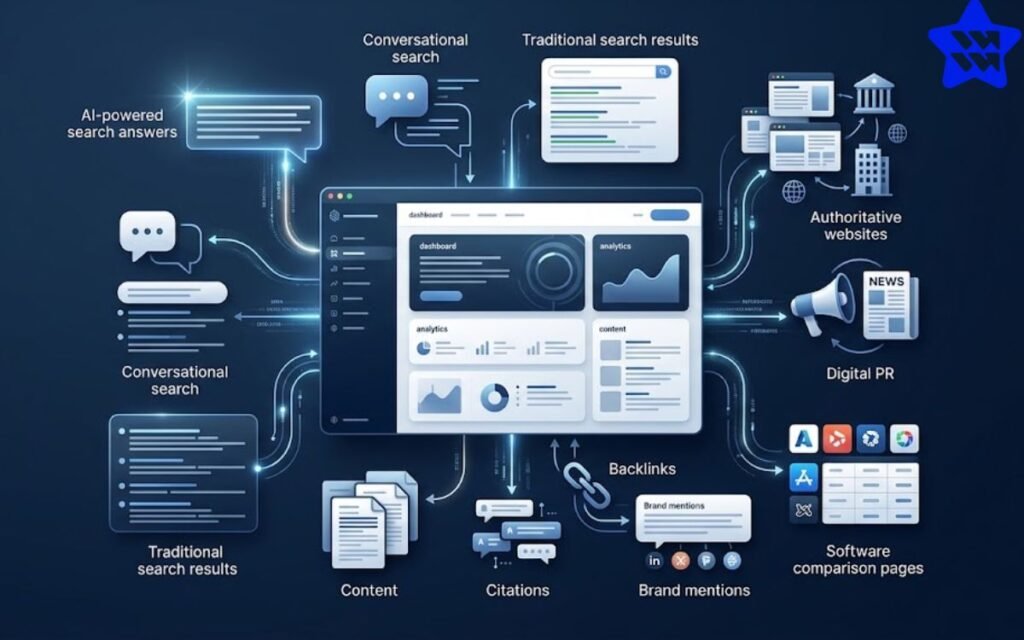
AI search has changed how people discover information, but it has not made SEO irrelevant.
Google’s current guidance for AI search emphasizes many of the same fundamentals: useful content, technical accessibility, strong site structure, and information that provides unique value.
Google has also introduced Search Console reporting for visibility from generative AI features such as AI Overviews and AI Mode, although the new reporting is initially being rolled out to a subset of sites.
For businesses, this means SEO measurement is becoming broader.
The goal is no longer simply to rank for a keyword.
The goal is to become a credible source that can be discovered across modern search experiences.
When Should You Actually Start?
If your business has proven demand, a clear offer, healthy customer economics, and competitors already benefiting from organic search, delaying SEO simply because it takes time may be a mistake.
The longer you wait, the more time competitors have to build useful content, earn relevant links, establish brand authority, and capture search demand.
But if your business has no validated offer, no search demand, no conversion system, or no budget for consistent work, SEO should probably wait.
That is not an SEO problem.
That is a business readiness problem.
Final Thought
SEO is not something every business should aggressively invest in immediately.
It becomes valuable when the economics make sense.
If customers are searching, competitors are visible, your offer converts, and you are prepared to invest for the long term, SEO can become one of the strongest acquisition channels your business owns.
The smartest businesses in 2026 will not ask:
How quickly can we rank?
They will ask:
How can we build organic visibility that continues producing business value over time?
That is the right question to build an SEO strategy around.
Comments
Related posts

AI SEO, SaaS, SEO
September 4, 2026