
Table of Contents
Table of Contents
Share This Post
Search is changing fast.
For a time companies focused on getting their pages to rank high in Googles search results. The goal was simple: get a page in the 10 move up in the rankings get people to click and turn those clicks into customers.
In 2026 this strategy still matters.. It is not the whole picture anymore.
Google is using intelligence to help people find and understand information right in the search results. Google says its artificial intelligence experiences are built on its existing search ranking and quality systems. This means that the basics of search engine optimization or SEO are still important.
This creates an opportunity for companies: artificial intelligence search visibility.
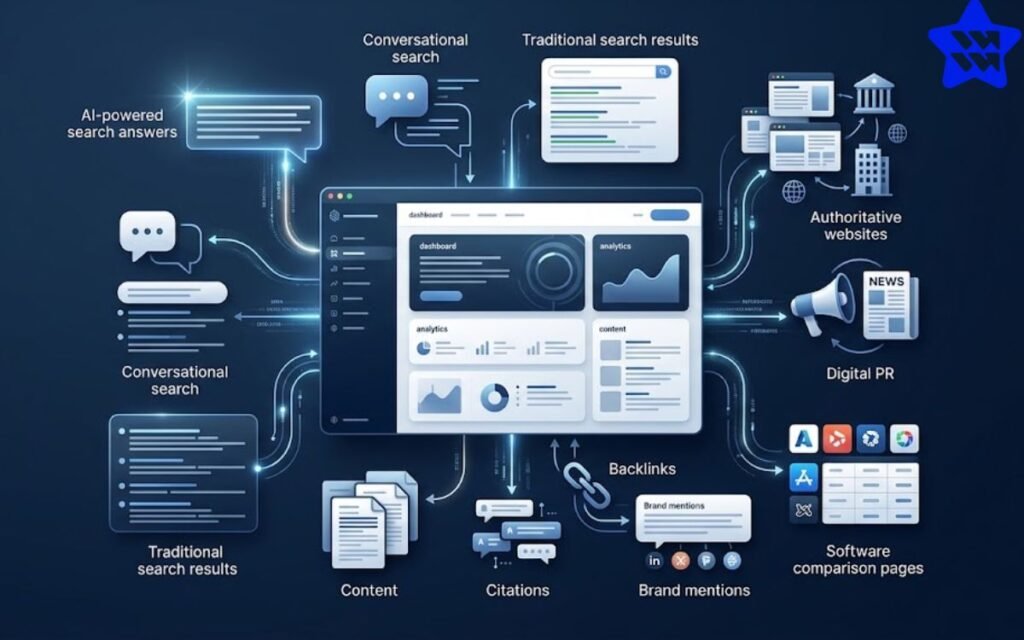
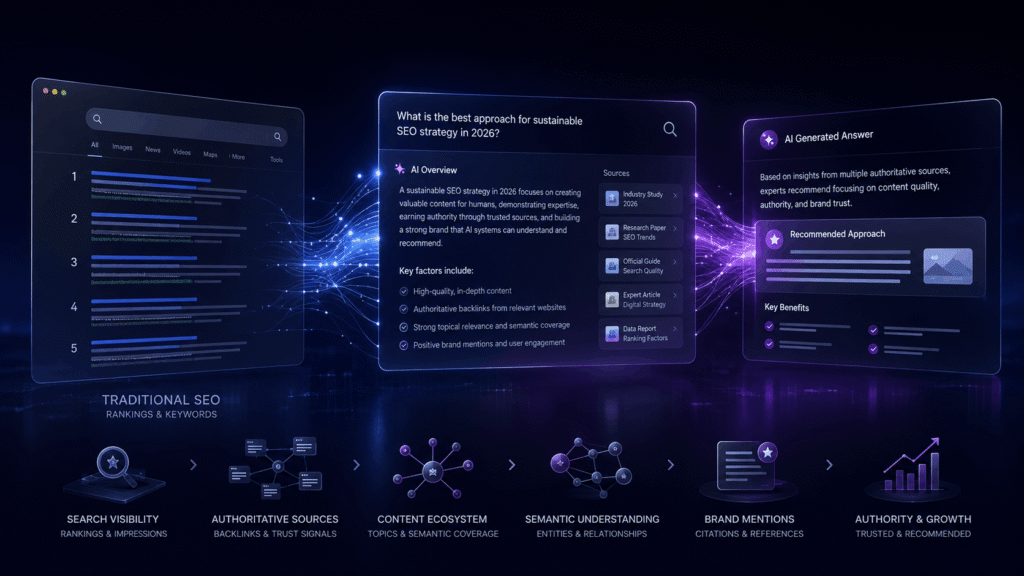
Of just thinking about where a webpage ranks companies should think about whether their brand, content, products and expertise can be found and referenced when people ask complicated questions using artificial intelligence-powered search.
What is artificial intelligence search SEO?
Artificial intelligence search SEO is the process of making a website more visible in search experiences that use intelligence to understand questions get information and generate answers.
Googles artificial intelligence overviews and artificial intelligence mode are examples of this changing search environment.
The goal is not just to optimize for intelligence.
The real goal is to create a website that search engines and artificial intelligence systems can understand, trust and get information from.
This starts with the basics that have always mattered in SEO:
Useful content
Clear website structure
Strong technical foundations
Relevant topics
Demonstrable expertise
Authoritative external references
A trustworthy brand
Googles current guidance emphasizes creating valuable unique people-first content rather than content created just to manipulate rankings.
Why artificial intelligence search matters for companies in 2026
The search journey was pretty straightforward.
Someone searched for a keyword Google showed a list of pages. The person clicked on one of those results.
Artificial intelligence-powered search changes the experience.
Someone might ask a more detailed question and get a generated response that combines information from multiple sources.
That means companies need to think beyond keywords.
They need to build search authority around topics.
For example an SEO agency should not just try to rank for “SEO agency.”
It could also create useful resources covering:
SEO strategy
Link building
Technical SEO
Local SEO
Ecommerce SEO
Content strategy
SEO audits
Search visibility
Artificial intelligence search optimization
Google artificial intelligence overviews
Digital PR
Authority building
This creates a collection of relevant information that helps establish topical expertise.
Does traditional SEO still matter?
Yes it does.
Anyone saying that traditional SEO is dead because of artificial intelligence search is oversimplifying things.
Googles own documentation says its generative artificial intelligence search features rely on its existing search systems to get information. Google also continues to recommend core SEO practices for websites appearing in these experiences.
That means companies should not stop doing:
Technical SEO
Search engines still need to crawl, understand and index a website.
On-Page SEO
Pages still need topics, useful information, logical structure and alignment with search intent.
Content
Companies need genuinely useful information rather than generic pages created just to target keywords.
Link Building
Relevant external websites can help establish authority, discoverability and relationships across the web.
Brand Authority
The consistently a company is represented across trustworthy sources the easier it becomes for search systems to understand what that company does and why it is relevant.
How can a company improve its intelligence search visibility?
There is no trick that guarantees inclusion in an artificial intelligence-generated answer.
Instead companies should build an overall search presence.
1. Create useful content
The first step is simple: publish information that actually helps people.
Googles guidance for artificial intelligence search specifically emphasizes unique, valuable, reliable people-first content.
Avoid publishing pages that simply rewrite what already exists.
Instead add something
First-hand experience
Original research
Data
Examples
Expert analysis
Case studies
Practical processes
Unique opinions supported by evidence
A page that contributes something new has a stronger reason to exist.
2. Answer questions clearly
Artificial intelligence search users often ask questions instead of typing short keywords.
For example:
“How much does link building cost for a business?”
is different from:
“link building cost.”
Create content that answers questions directly.
Give the answer clearly explain the reasoning provide examples and then expand into the details.
This makes the content easier for both users and search systems to understand.
3. Build authority
Publishing one article about SEO does not make a company an authority on SEO.
A stronger strategy is to build a network of content.
For example:
SEO
→ Technical SEO
→ On-Page SEO
→ Off-Page SEO
→ Link Building
→ Digital PR
→ Content Strategy
→ SEO
→ Ecommerce SEO
→ Artificial intelligence SEO
These topics can then be connected through strategic internal linking.
The result is a website with a topical structure instead of a collection of unrelated blog posts.
4. Earn backlinks
Artificial intelligence search does not mean backlinks suddenly became irrelevant.
Backlinks remain a part of the broader search ecosystem and the current SEO conversation is increasingly connecting link building with authority, brand signals and artificial intelligence search visibility.
The quality of the link matters.
A relevant editorial backlink from a website can be more valuable than a large number of unrelated links.
For example an SEO agency receiving a mention from a respected marketing publication makes more sense than receiving dozens of links from unrelated websites.
This is why modern link building should focus on relevance, authority, editorial context and genuine value.
5. Strengthen your brand across the web
Your website is not the place where your company exists online.
Search systems can encounter information about your company across websites and platforms.
That makes brand mentions, PR, industry publications, reviews, expert contributions and relevant backlinks valuable parts of a broader authority strategy.
The goal is not to manipulate intelligence systems into mentioning your brand.
The goal is to build an enough online presence that your company becomes a legitimate source within its industry.
6. Make your website easy to understand.
A artificial intelligence system still needs reliable information to work with.
Make important information easy to find.
Your website should clearly explain:
What your company does
Which services you provide
Who you serve
Which industries you specialize in
What makes your approach different
How people can contact you
Your service pages should not be marketing pages filled with empty claims.
Explain what you actually do and how the process works.
What about GEO?
You will see the term GEO or Generative Engine Optimization used in the SEO industry.
The term is becoming popular because search is expanding beyond blue links into artificial intelligence-generated answers and conversational search experiences.
Companies should be careful about treating GEO as a magic replacement for SEO.
Googles own guidance makes a point: existing SEO best practices remain relevant for its generative artificial intelligence experiences.
Instead of creating a completely separate “artificial intelligence SEO” system companies should strengthen the fundamentals and adapt their content and authority strategies to the changing search environment.
Artificial intelligence search does not mean you should stop building links
Thiss where many companies may make the wrong move.
Some marketers see intelligence-generated answers and assume backlinks no longer matter.
That conclusion is premature.
Search is becoming complex not less.
A strong website still needs:
Quality content
accessibility
Relevant internal links
External authority
Brand credibility
Topic coverage
Strong user experience
Link building should therefore become more strategic rather than disappear.
Of asking:
“How many backlinks can we build?”
ask:
“Which relevant websites would make our business more credible and discoverable?”
That is a much better question.
The future of SEO is about visibility not rankings
The biggest change in search is not simply that artificial intelligence exists.
The bigger change is that users can discover information without following the path of searching a keyword scanning ten blue links and clicking the first result.
Artificial intelligence-powered search can summarize information compare options answer questions and surface sources within the search experience.
That means companies should measure more than rankings.
Important metrics can include:
Organic traffic
Conversions
Brand searches
Referral traffic
Backlink growth
Qualified leads
Search visibility
Mentions across relevant sources
Visibility in intelligence-generated search experiences
The exact metrics will depend on the company and its goals.
Final thoughts
Artificial intelligence search is changing SEO. It is not replacing SEO.
The companies most likely to benefit from this shift will not be the ones searching for shortcuts or trying to manipulate intelligence-generated answers.
They will be the companies that consistently build content establish genuine authority earn relevant mentions improve their websites and become recognizable sources within their industries.
Googles current guidance is clear about the importance of original people-first content while its generative artificial intelligence search systems continue to rely on core search technology.
For companies in 2026 the goal should be bigger, than ranking number one for a keyword.
The goal is to build a website and brand that search engines, artificial intelligence systems and real people can find, understand, trust and recommend.
That is the direction modern SEO is heading.
Comments
Related posts
AI SEO, SaaS, SEO
September 4, 2026