
Search is changing faster than most businesses realize. People are no longer using Google alone to discover companies, products, experts, and solutions. They are also asking AI assistants such as ChatGPT, Gemini, Claude, and Perplexity to recommend brands and explain which companies they should trust.
That creates a new challenge for marketers. Ranking on Google is still important, but being visible inside AI-generated answers is becoming another part of online visibility. This is where Digital PR becomes particularly valuable. Instead of focusing only on acquiring backlinks, brands can use earned media, expert commentary, journalist relationships, original data, and credible third-party coverage to build a stronger presence across the web.
Digital PR does not guarantee that an AI model will mention your company. However, consistent coverage from credible publications can contribute to the broader web presence, reputation, and information ecosystem from which search engines and AI systems may draw.
What Is Digital PR & How Does It Drive LLM Visibility?
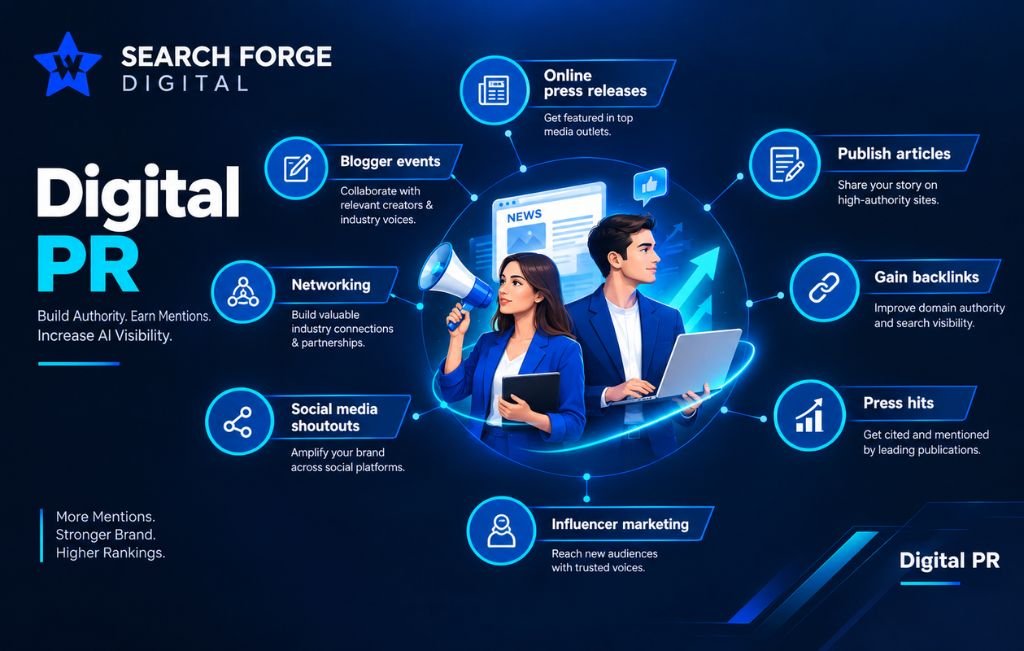
Digital PR is the process of earning online media coverage by providing journalists, publishers, bloggers, podcasts, and other media professionals with genuinely useful information, expert commentary, original research, data, or stories.
Traditional link building often focuses on obtaining a link from another website. Digital PR takes a wider approach. The objective is to make a brand worth mentioning.
Imagine that an established publication writes about a topic in your industry and quotes your founder as an expert. Another publication references your original research. A podcast interviews your company executive, while several journalists independently mention your brand in relevant articles. These individual mentions can collectively strengthen your digital footprint.
This is where the concept of “Citation Engineering” can be useful as a practical marketing framework. The term should not be treated as an official Google or AI ranking factor. Instead, think of it as the deliberate process of creating credible, relevant, and consistent sources that make a brand easier to discover and understand across search and AI environments.
AI visibility is not simply about collecting the largest number of backlinks. Relevance, credibility, consistency, entity information, original content, and third-party references all matter when a system is trying to understand what a company does and whether it is a legitimate source.
For example, a company that is repeatedly discussed by credible publications in connection with a specific subject has a stronger public information footprint than a company that only publishes promotional pages on its own website.
That is why modern Digital PR should focus on earning attention rather than buying links.
The Truth About HARO Saturation in 2026
Help a Reporter Out, better known as HARO, remains one of the best-known journalist-source platforms. Its ownership and operating model have changed over time. Featured acquired HARO from Cision in April 2025 and brought it back as a free email-based service connecting journalists with sources.
But marketers should not make the mistake of treating HARO as a guaranteed link-building machine.
Journalists receive many responses to popular requests. If your answer sounds generic, promotional, or obviously generated from a template, it has little reason to stand out.
The problem is not necessarily that “HARO is dead.” The bigger problem is that competition for attention is real.
A journalist asking for ten expert opinions may receive dozens or hundreds of responses. Sending the same AI-generated paragraph that could have been written for any company gives the journalist no strong reason to select you.
The better strategy is to use HARO as one source of opportunities rather than building your entire Digital PR strategy around it.
Featured currently operates HARO as one part of a broader PR ecosystem. Its platform also covers journalist requests, podcasts, bylined opportunities, speaking opportunities, awards, creator partnerships, media monitoring, and AI visibility.
This reflects a bigger change in PR: brands have more opportunities than traditional journalist-request platforms alone.
5 Digital PR Platforms Worth Exploring
1. Qwoted
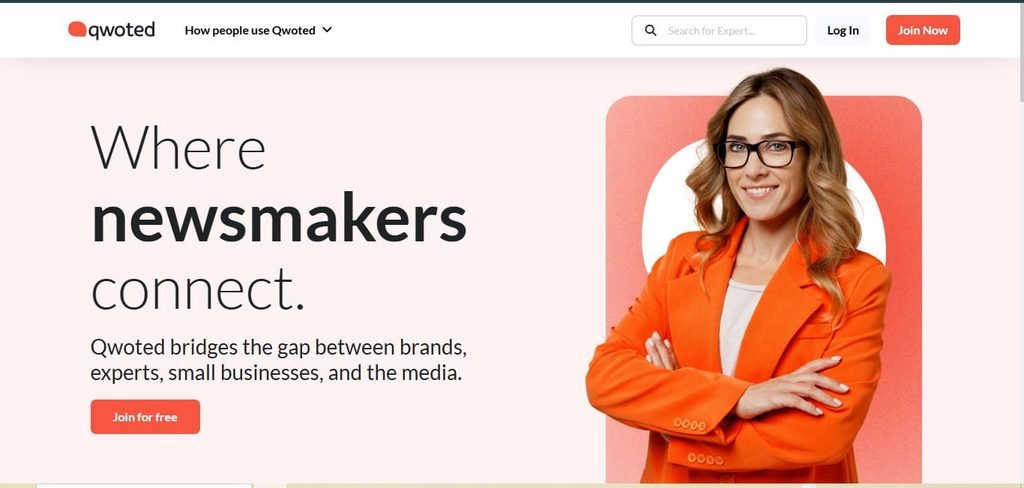
Qwoted is designed to connect journalists with expert sources. Reporters can submit requests and receive responses from relevant professionals, while experts can discover media opportunities related to their experience.
The platform is particularly useful when you have genuine expertise to contribute rather than simply wanting a backlink.
Qwoted also emphasizes reducing irrelevant pitches and helping journalists find suitable sources. Its platform includes messaging and tools for managing expert-source interactions.
The key advantage is relevance. A highly specific response to a journalist’s actual question is much more valuable than a generic “I would love to contribute” message.
2. SourceBottle
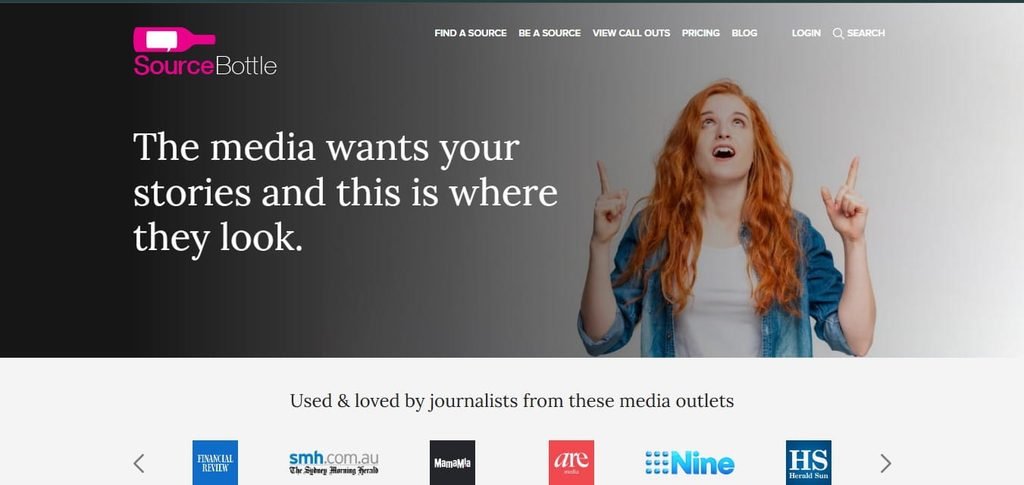
SourceBottle is another useful option for businesses and experts looking for media opportunities. It connects journalists, writers, and bloggers with sources and distributes relevant media call-outs to subscribers.
The platform has a particularly strong connection to Australia and New Zealand but also supports international opportunities. SourceBottle says its network includes experts, brands, PR professionals, organizations, and media professionals across multiple countries.
It also supports expert profiles, case studies, podcasts, speakers, contributors, and other opportunities.
For brands with real customer stories or original experiences, this can be more useful than chasing generic backlink opportunities.
3. Connectively
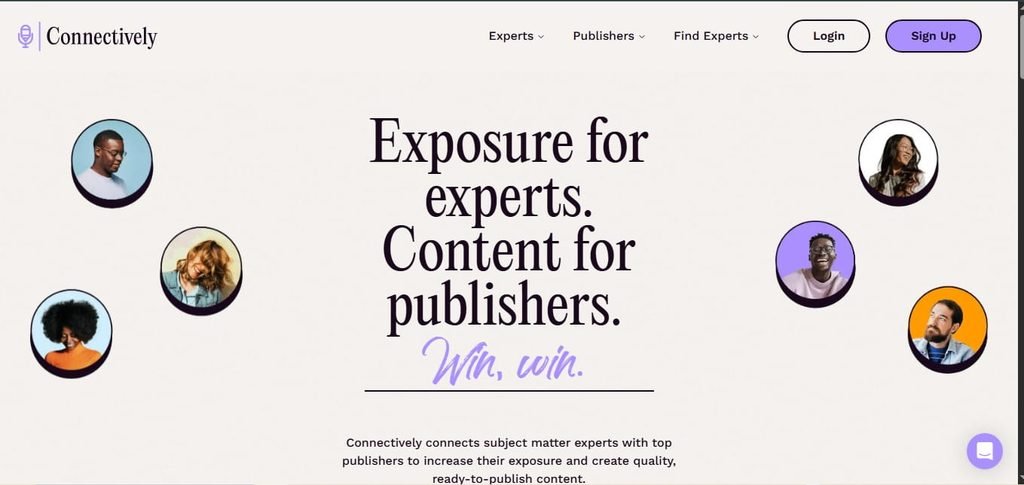
Connectively is another platform within the Featured ecosystem. Featured explains that Connectively is its journalist-request platform where experts can answer publisher questions and submit material through a web-based system.
This makes it worth considering when you want to diversify beyond email-based journalist requests.
4. Featured
Featured is now positioned as an AI-powered PR platform rather than simply another journalist-request website. Its current platform helps users discover earned-media opportunities and also provides tools related to media monitoring and AI visibility.
This is particularly relevant to marketers interested in the connection between traditional earned media and modern AI search visibility.
5. Direct Journalist Outreach
One of the most overlooked Digital PR strategies is also one of the simplest: building relationships directly with journalists.
Instead of waiting for a public request, identify writers who consistently cover your industry. Read their recent articles. Understand the subjects they care about. Then contact them only when you have something genuinely useful.
That could be original research, a proprietary dataset, a strong expert opinion, a customer trend, an unusual case study, or a credible response to breaking industry news.
Direct outreach requires more research, but it can produce much stronger relationships than sending hundreds of generic pitches.
Digital PR Platform Comparison
| Platform | Main Opportunity | Best Suited For | Competition |
|---|---|---|---|
| HARO | Journalist requests | Expert commentary | High |
| Qwoted | Expert-source matching | Professionals with specific expertise | Medium–High |
| SourceBottle | Media call-outs and case studies | Experts, brands and PR teams | Medium |
| Connectively | Publisher questions | Expert contributions | Medium |
| Featured | Multi-channel PR opportunities | Modern PR and AI visibility workflows | Varies |
Competition changes constantly, so these levels should be treated as practical estimates rather than official platform statistics.
Step-by-Step Guide to Pitching Journalists
The biggest mistake in Digital PR is thinking that a journalist needs a long explanation about your company.
They usually don’t.
They need the answer to their question.
Start by reading the journalist’s request carefully. If the journalist asks for three examples, provide three relevant examples. If they ask for an expert opinion, give an opinion. If they request data, provide data that you can actually support.
Never Plagiarize
Do not copy another expert’s answer, rewrite someone else’s article, or recycle a competitor’s response.
Your strongest advantage is your own experience.
If you have worked with clients, analyzed campaigns, managed a business, conducted research, or observed a particular industry trend, turn that experience into a useful insight.
Keep It Concise
A journalist does not need your company’s entire history.
Lead with the useful information.
A strong response can often be structured like this:
Answer → Explanation → Evidence → Short Bio
That structure makes your response easier to scan and easier for a journalist to quote.
Use a Professional Email
A professional business email can help establish context and credibility, especially when you are representing a company or agency. However, do not assume that using a domain email automatically guarantees higher open or response rates.
The quality and relevance of the pitch matter far more.
For example, if you are representing Search Forge Digital a professional address such as rehman@searchforgedigital.com can clearly connect the source to the company.
Give Journalists Something They Can Actually Use
Avoid empty statements such as:
“I am an expert in marketing and would love to contribute.”
That tells the journalist almost nothing.
Instead:
From the campaigns we have analyzed, one consistent pattern is that brands earn stronger media responses when their pitch contains one specific data point rather than a broad industry prediction.
The second statement contains an actual insight. That is what makes it potentially useful.
Do Not Over-Promote Your Brand
Digital PR is not an advertisement.
If every sentence mentions your company, product, service, or website, the response will feel promotional.
Give the journalist value first.
If your expertise is genuinely useful, your company can often be introduced naturally through the expert attribution.
Why Digital PR Is Becoming More Important for AI Search
AI search systems need information about businesses, people, products, and organizations. Much of that information exists across the open web.
This is why a brand’s online presence should not be limited to its own website.
A company can publish the best content in its industry and still have a weak reputation outside its own domain. Digital PR helps solve that problem by creating opportunities for independent publications and media professionals to discuss the company, its experts, its research, or its ideas.
That does not mean every media mention will result in an AI citation. There is no legitimate strategy that can guarantee that ChatGPT, Gemini, or another AI system will mention a particular brand.
The practical objective is different:
Build a strong enough digital footprint that your brand becomes easy to discover, understand, verify, and reference.
This is especially important as search evolves from a list of links into direct answers.
How Search Forge Digital Can Help
Building Digital PR campaigns consistently requires research, journalist identification, opportunity monitoring, expert positioning, pitch writing, follow-up, and measurement.
Most business owners do not have time to monitor journalist requests every day or research every writer before sending a pitch.
That is where Search Forge Digital can help.
Instead of relying on mass outreach or low-quality link placements, the focus should be on white-hat off-page strategies, relevant earned-media opportunities, expert commentary, and credible brand mentions.
The objective is not to manufacture authority.
It is to build evidence of authority across the web.
Ready to Boost Your Brand’s AI Visibility?
AI search is not replacing traditional SEO overnight. But the way people discover information is changing, and brands that depend entirely on rankings are exposing themselves to unnecessary risk.
Digital PR provides another way to build visibility.
Create original insights. Respond to relevant journalist requests. Build relationships with writers. Earn legitimate media coverage. Strengthen your brand’s presence beyond your own website.
Most importantly, stop thinking about Digital PR as simply another way to get backlinks.
Think bigger.
The goal is to become a brand worth mentioning.
Frequently Asked Questions
1. What is Digital PR for AI search?
Digital PR for AI search is the practice of using earned media, expert commentary, original research, journalist relationships, and credible third-party coverage to strengthen a brand’s online presence and discoverability across traditional and generative search environments.
2. Can Digital PR guarantee that ChatGPT will mention my brand?
No. Anyone promising guaranteed ChatGPT, Gemini, or other LLM mentions is overstating what Digital PR can control. AI systems generate answers using complex information and retrieval processes. Digital PR can improve a brand’s visibility and information footprint, but it cannot guarantee a specific AI citation.
3. Is HARO still available in 2026?
Yes. Featured acquired HARO from Cision in April 2025 and revived it as a free email-based journalist-source service. HARO currently operates as a standalone service under Featured.
4. Is Qwoted better than HARO?
Neither platform is universally better. HARO can provide a large volume of journalist opportunities, while Qwoted is useful for matching journalists with relevant expert sources. The better platform depends on your niche, expertise, target publications, and the quality of your responses.
5. How can Search Forge Digital improve my brand’s AI visibility?
Search Forge Digital can support your off-page strategy through Digital PR, earned-media opportunities, journalist outreach, expert positioning, and other white-hat approaches designed to strengthen your brand’s authority and visibility across the web.