For B2B SaaS companies, organic search has never been simply about publishing blog posts and trying to rank for a few high-volume keywords. The SaaS buying journey is complex, the competition is intense, and potential customers often spend weeks or months researching a solution before they ever request a demo or start a trial. In 2026, that complexity has increased even further as search continues to evolve through AI-powered experiences, conversational queries, comparison searches, and increasingly sophisticated ways of discovering information.
This is why a specialized SaaS SEO agency can be fundamentally different from a general SEO provider. A B2B SaaS company does not just need more traffic. It needs the right traffic from people who have a genuine problem, understand the category, are evaluating solutions, and may eventually become customers. The SEO strategy therefore has to connect search visibility with product positioning, buyer intent, content authority, technical performance, and ultimately business growth.
Google’s current guidance also makes one point clear: SEO fundamentals remain important for AI-powered search experiences. Google says its AI features use information from the Search index and that existing SEO best practices continue to matter. Being technically accessible, creating helpful content, making important information available in text, and building a clear site structure remain foundational.
For B2B SaaS businesses, this creates a strong case for working with a team that understands the SaaS business model rather than treating the website like any other business website.
What Makes B2B SaaS SEO Different?
The first problem with a generic SEO approach is that SaaS websites have a completely different relationship with search intent. A local business may primarily want people searching for a service in a particular location. An ecommerce company may focus heavily on product and category searches. A B2B SaaS company, however, can have dozens of different audiences searching for the same product category from completely different perspectives.
A potential customer might search for a problem they are experiencing without knowing the name of the software category. Another person may already understand the category and search for the best solutions. Someone else may search for a specific competitor, compare two platforms, look for an alternative, investigate pricing, or search for a particular integration. A senior decision-maker may be looking for business outcomes while a technical user may be looking for functionality and implementation details.
That means SaaS SEO cannot be built around one list of keywords. It needs to understand the entire decision-making process behind those keywords.
A specialized SaaS SEO strategy connects informational, commercial, product, comparison, and transactional intent. Instead of asking only, “What keywords have search volume?” the more important questions become, “Who is searching for this?”, “What problem are they trying to solve?”, “Where are they in the buying journey?”, and “What page should they see next?”
This difference is one of the biggest reasons a SaaS company can publish hundreds of articles and still generate disappointing business results.
B2B SaaS Buyers Have Longer and More Complicated Journeys

B2B SaaS purchases are rarely impulsive. Depending on the product, the buying process can involve marketers, sales teams, executives, IT departments, finance teams, operations teams, security professionals, and other stakeholders.
One person may discover the brand through an educational article. Another may encounter it through a comparison page. Someone else may find a product feature page through Google. Later, the company may return to the website after searching for reviews, alternatives, pricing, integrations, or implementation information.
SEO therefore needs to support the buyer throughout this journey.
A specialized SaaS agency can build content around different stages of intent instead of treating every searcher as if they were ready to buy immediately. Early-stage content can help potential buyers understand a problem. Mid-funnel content can explain approaches and solutions. Commercial content can help users compare products. Product and use-case pages can demonstrate how the SaaS platform solves specific problems.
The objective is not simply to get a visitor onto the website. The objective is to create a logical path from discovery to consideration and eventually to conversion.
Keyword Research Has to Go Beyond Search Volume
Traditional keyword research often encourages businesses to chase terms with the highest search volume. That can be particularly dangerous for B2B SaaS.
A keyword with 50,000 monthly searches is not automatically more valuable than a keyword with 500 searches. If those 500 searches come from people actively evaluating a software solution, they may have considerably more commercial value.
For example, a SaaS company could target broad educational searches related to its industry. Those terms may attract large amounts of traffic, but the majority of visitors might never become customers. At the same time, highly specific searches such as software comparisons, alternatives, integration queries, feature searches, or industry-specific software terms may attract fewer people but much stronger buying intent.
A specialized SaaS SEO agency therefore looks at search intent, business relevance, funnel stage, competition, conversion potential, and the relationship between keywords rather than relying on search volume alone.
This creates a much stronger keyword architecture for the entire website.
Building Topical Authority Around the SaaS Product

Another major area where specialized SaaS SEO matters is topical authority.
A SaaS website should not simply publish unrelated articles whenever a keyword opportunity appears. Its content should demonstrate meaningful expertise around the problems, workflows, use cases, and industries connected to its product.
For example, a project management SaaS company may need content covering project planning, team collaboration, workflow management, resource allocation, productivity, reporting, project templates, integrations, implementation, and industry-specific use cases.
The important point is that these topics should connect to the actual product and audience.
Pillar pages can establish broader topical coverage, while supporting articles answer narrower questions. Internal links then connect related concepts and help users move from educational information toward relevant commercial pages.
This approach is considerably more useful than producing hundreds of disconnected articles simply because keyword tools show potential search volume.
SaaS Product Pages Should Be Part of the SEO Strategy
One of the most common SaaS SEO mistakes is treating the blog as the center of the strategy while product pages receive very little attention.
A SaaS website’s most commercially important pages are often its product, feature, solution, use-case, industry, integration, comparison, and pricing-related pages. These pages can target highly valuable searches much closer to the point of purchase.
A specialized agency can identify which pages should exist, what intent each page should satisfy, how pages should be internally connected, and where content gaps exist between informational searches and commercial searches.
For example, instead of having one generic “Features” page, a SaaS company may benefit from dedicated pages for major features or workflows when there is genuine search demand and user value behind them. Similarly, use-case pages can explain how the product solves a particular business problem for a particular audience.
The goal is not to create pages for every imaginable keyword variation. The goal is to create useful pages where they genuinely help users and make the website easier to understand.
Technical SEO Is Especially Important for SaaS Websites
Many SaaS companies use modern JavaScript frameworks and highly dynamic website architectures. These technologies can create excellent user experiences, but they can also introduce SEO problems when crawling, rendering, internal linking, or indexation is not handled correctly.
Google explains that JavaScript-powered websites go through crawling, rendering, and indexing processes, meaning developers and SEO teams need to make sure important content is accessible and discoverable.
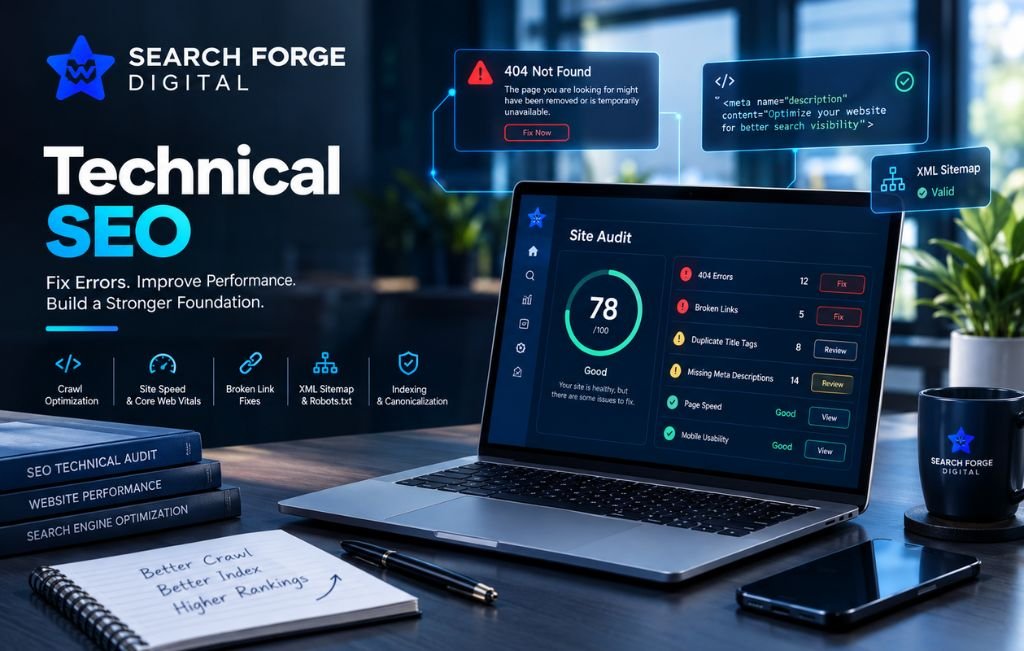
For SaaS companies, technical SEO can involve much more than checking title tags and meta descriptions. An effective technical audit may need to investigate indexation, canonicalization, redirects, JavaScript rendering, internal links, XML sitemaps, robots directives, duplicate URLs, page templates, structured data, site architecture, and the way important content is presented to search engines.
Google also recommends putting key information in text and using structured data where appropriate to help search engines understand page content.
This is one area where a specialized SaaS SEO team can work more effectively with developers because the SEO strategy has to fit the technical architecture of the product and marketing website.
AI Search Has Changed the SaaS SEO Conversation
In 2026, SaaS companies also have to think beyond traditional blue-link rankings.
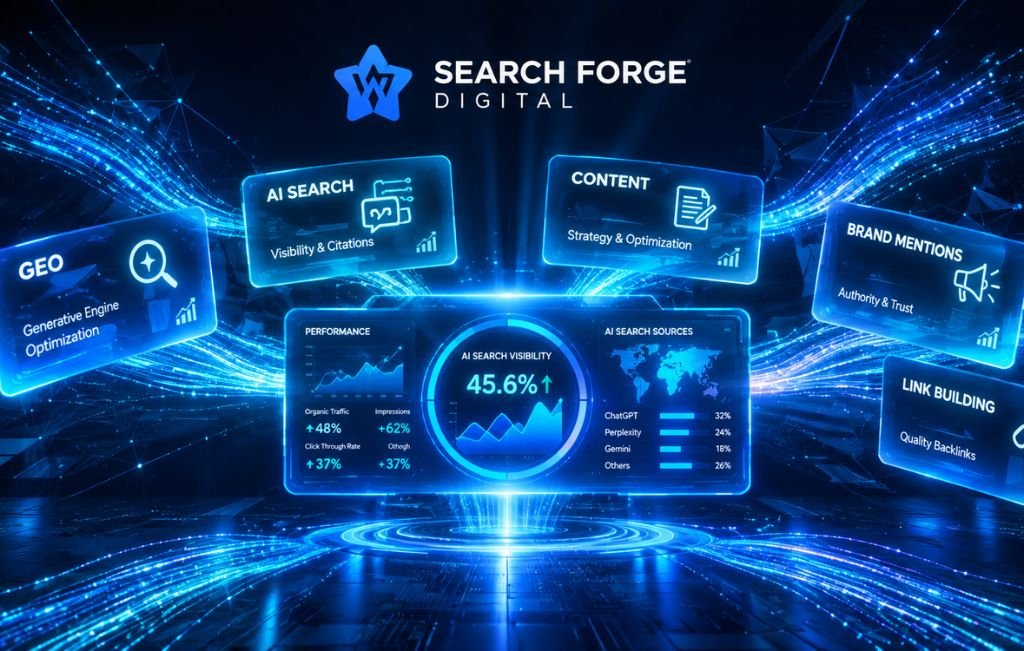
Google has expanded AI-powered experiences such as AI Overviews and AI Mode, while users increasingly ask more complex questions and expect synthesized answers. Google’s own documentation says AI features can use multiple related searches and sources to develop responses, while still relying on the broader Search ecosystem.
This does not mean that companies should abandon SEO and chase a mysterious “GEO trick.” In fact, Google’s 2026 guidance specifically emphasizes that existing SEO fundamentals remain relevant for generative AI search.
For SaaS brands, the practical implication is more straightforward. The company needs to become an understandable, credible, useful source of information across the topics associated with its product.
That means clear product information, genuinely useful content, strong internal linking, technically accessible pages, relevant authority signals, original insights, and consistent information about the company and its solutions.
AI visibility should therefore be treated as an extension of a broader search and authority strategy rather than a replacement for SEO.
Why Generic AI Content Is Not a SaaS SEO Strategy
The availability of generative AI has made it easier than ever to produce large quantities of content. That does not mean publishing thousands of AI-generated articles will automatically create organic growth.
Google’s guidance states that AI-generated content itself is not automatically against its guidelines, but generating large numbers of pages without adding value can fall under scaled content abuse. Google emphasizes original, helpful, people-first content rather than content created primarily to manipulate rankings.
This is especially important for B2B SaaS because generic content is easy to reproduce. If ten competing SaaS companies publish essentially the same AI-generated article explaining the same basic concept, none of them has created a meaningful competitive advantage.
SaaS companies need content that contains something worth citing, remembering, or discussing. That could include original research, first-hand product experience, expert commentary, customer insights, proprietary data, detailed implementation knowledge, practical frameworks, unique examples, or genuinely useful comparisons.
AI can help with research, organization, and production workflows, but the strategic value has to come from the business itself.
Comparison and Alternative Content Matters More Than Many SaaS Companies Realize
When a buyer searches for “X vs Y,” “X alternatives,” or “best software for [specific use case],” the search intent is often significantly closer to a purchasing decision.
These searches also reveal what the buyer is actually evaluating.
A SaaS company can use comparison content to explain differences honestly, clarify use cases, identify strengths and limitations, and help prospects determine which type of solution fits their requirements.
The mistake is creating thin pages designed only to capture competitor keywords. Good comparison content needs real research and meaningful information. If the page simply repeats marketing claims without helping the reader make sense of the alternatives, it has little long-term value.
A specialized SaaS SEO agency can build a comparison strategy that connects these pages to product positioning, supporting content, and conversion paths.
SaaS Link Building Needs Relevance, Not Just Volume
Backlinks still form part of the broader authority picture, but SaaS companies should not reduce link building to buying or acquiring as many links as possible.
Relevant authority is more useful than random volume.
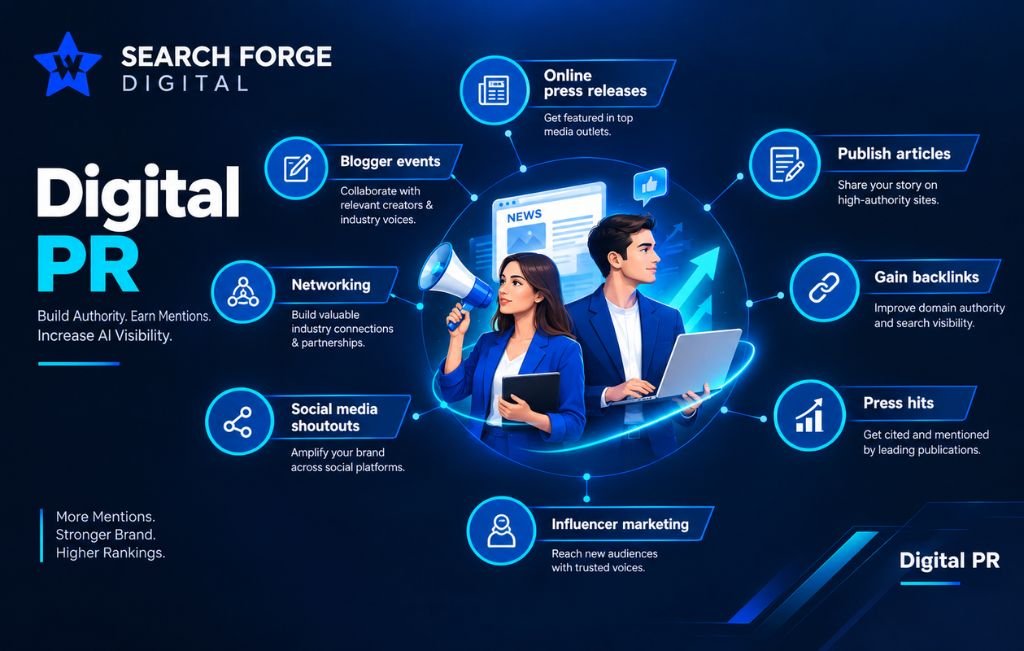
A B2B SaaS brand can build authority through digital PR, original research, industry publications, expert contributions, data-driven content, partnerships, useful resources, podcasts, interviews, and other legitimate forms of industry visibility.
The best link-building campaigns are often connected to something genuinely worth referencing. A company that publishes original industry research, for example, has a stronger reason for journalists, bloggers, analysts, and industry publications to mention it.
This is another area where SaaS expertise matters because the strategy should be connected to the company’s market rather than generic outreach lists.
SEO Should Be Connected to Revenue
One of the biggest problems with traditional SEO reporting is focusing too heavily on rankings and traffic.
Rankings matter, but a B2B SaaS company does not pay salaries with impressions.
The real business question is whether organic search is helping generate qualified demand.
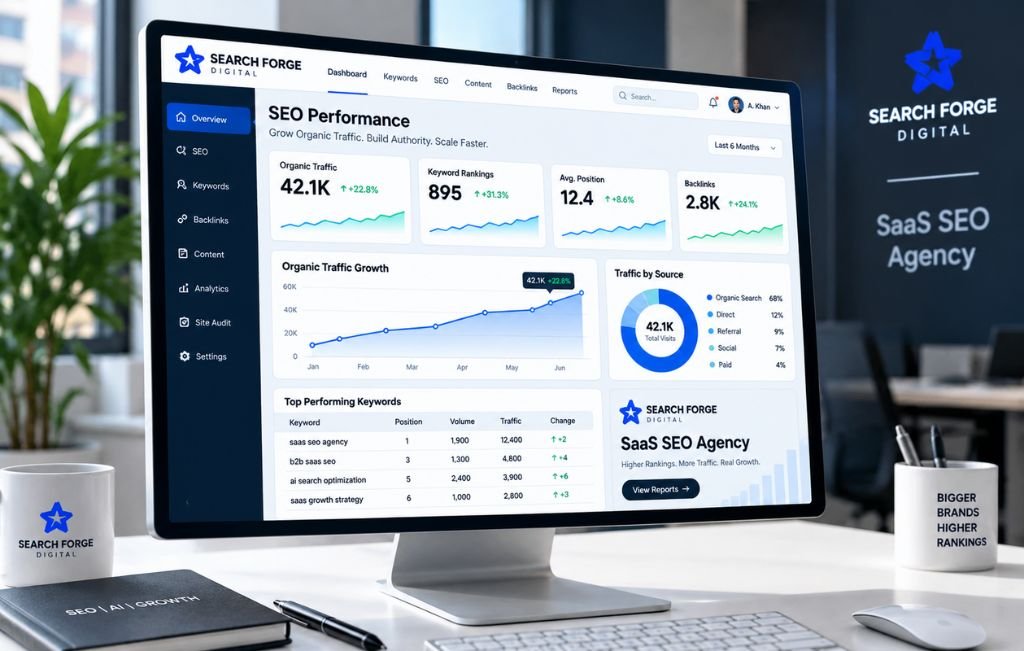
A stronger measurement framework can connect organic visibility with metrics such as qualified organic traffic, demo requests, free trials, assisted conversions, sales opportunities, pipeline contribution, and eventually revenue where reliable attribution is available.
This changes the strategy.
If a page receives 20,000 visitors but generates almost no meaningful business activity, increasing its traffic may not be the highest priority. A page receiving 1,000 highly relevant visitors and producing qualified leads may deserve considerably more attention.
A specialized SaaS SEO agency understands this distinction and works toward business outcomes rather than presenting traffic increases as the entire definition of success.
Why SaaS Companies Often Need Specialized Expertise
A general SEO provider can understand SEO fundamentals, but B2B SaaS requires an additional layer of business understanding.
The agency needs to understand the product category, customer personas, sales cycle, competitive landscape, technical environment, content funnel, conversion process, and commercial intent behind search queries.
It also needs to understand that a SaaS website can serve multiple audiences at once. The person reading a technical integration page may have completely different requirements from the executive evaluating pricing and ROI.
That complexity is exactly why specialization can matter.
A specialized SaaS SEO agency can bring SEO strategy into alignment with product marketing, demand generation, content strategy, technical development, and sales objectives instead of treating SEO as an isolated marketing channel.
How Search Forge Digital Can Support B2B SaaS SEO
Search Forge Digital can approach SaaS SEO as a complete organic growth system rather than simply a content publishing service.
For a B2B SaaS company, that can mean beginning with a detailed analysis of the existing website, technical structure, keyword landscape, competitors, content coverage, product pages, internal linking, and organic conversion opportunities.
From there, the strategy can be developed around the company’s actual market and customers. Instead of creating content simply because a keyword exists, the focus can be placed on topics that support the buyer journey and strengthen the company’s authority within its category.
The content strategy can then connect educational content with commercial pages, use cases, features, comparisons, integrations, and other areas that can influence purchasing decisions.
Technical SEO can be handled alongside content so that the website’s important pages are discoverable, indexable, understandable, and properly connected. This becomes particularly important for SaaS companies operating on complex or JavaScript-heavy websites.
Search Forge Digital can also incorporate modern AI-search considerations into the broader SEO strategy without treating GEO as a magic replacement for traditional optimization. The objective is to build a website and brand that can be understood and referenced across evolving search experiences while maintaining strong fundamentals.
Most importantly, the strategy should remain tied to the company’s commercial goals. The purpose of SaaS SEO is not to produce impressive-looking traffic reports. It is to build sustainable organic visibility that reaches relevant prospects and contributes to the company’s pipeline.
What a Specialized SaaS SEO Process Should Look Like
A strong SaaS SEO campaign normally begins with research rather than content production. The first stage should establish how the company currently performs, what its customers search for, which competitors dominate important queries, what technical barriers exist, and where the biggest opportunities are.
The next stage is strategic planning. This involves developing keyword clusters, mapping search intent, creating a content architecture, improving product and solution page targeting, identifying technical priorities, and establishing an internal linking structure.
Technical improvements and content development then work together. Fixing technical problems without improving the content leaves opportunities on the table. Publishing excellent content while important pages cannot be efficiently crawled, indexed, or understood creates a different kind of problem.
After implementation, performance needs to be monitored continuously. Search behavior changes, competitors publish new content, products evolve, and search engines change how results are presented. SaaS SEO therefore should not be treated as a one-time website project.
It is an ongoing process of research, publishing, optimization, technical improvement, authority building, and measurement.
Common B2B SaaS SEO Mistakes in 2026
Many SaaS companies still make the same fundamental mistakes. They focus on keywords with large search volumes rather than commercial relevance. They publish generic AI-assisted articles without original insight. They create blog content while neglecting product and solution pages. They build backlinks without considering relevance. They measure traffic without understanding lead quality. They launch redesigns without involving SEO early enough. They also sometimes treat AI search as an entirely separate marketing channel instead of recognizing its relationship with the underlying quality and accessibility of their web content.
Another common mistake is trying to scale everything before proving what works.
Publishing 500 pages is not a strategy. Creating 500 genuinely useful pages that each serve a real audience need can be a strategy, but that requires research, quality control, internal linking, and ongoing optimization.
The better approach is to build a strong foundation, identify proven opportunities, and then scale intelligently.
Choosing the Right SaaS SEO Agency
When a B2B SaaS company evaluates an SEO agency, it should look beyond promises about rankings.
The agency should be able to explain how it approaches technical SEO, keyword research, product-led content, topical authority, comparison searches, SaaS buyer journeys, link acquisition, conversion tracking, and AI-powered search experiences.
It should also be able to explain what success will actually look like.
If an agency talks almost exclusively about publishing a certain number of articles or acquiring a certain number of backlinks every month, that is not enough information to judge the strategy. The important question is how those activities connect to the company’s customers and revenue model.
A good SaaS SEO strategy should have a clear reason behind every major activity.
Final Thoughts
B2B SaaS SEO in 2026 is no longer simply a competition to publish more articles or rank for more keywords. Search is becoming more conversational, AI-powered, and complex, while SaaS buyers are becoming more selective about the information they consume before making purchasing decisions.
Google’s current guidance reinforces that the fundamentals still matter. Websites need technically accessible content, useful and original information, strong site architecture, clear internal connections, and content created for people rather than solely for search engines. These fundamentals also provide the foundation for visibility across Google’s AI-powered search experiences.
For B2B SaaS companies, the bigger challenge is turning those fundamentals into a strategy that reflects how SaaS products are actually discovered, evaluated, compared, and purchased.
That is where specialized SaaS SEO expertise becomes valuable.
The right approach connects technical SEO, keyword strategy, topical authority, product pages, content, digital PR, conversion optimization, and evolving AI-search visibility into one coherent system. Instead of chasing traffic for its own sake, the goal is to attract the people most relevant to the business and help them move from discovering a problem to understanding a solution and eventually considering the product.
For SaaS founders and marketing teams looking to build long-term organic growth, SEO should therefore be treated as more than a traffic channel. It should become part of the company’s broader demand-generation and authority strategy.
That is the approach a specialized agency such as Search Forge Digital can bring to B2B SaaS growth: not simply more pages or more keywords, but a search strategy built around the product, the market, the buyer journey, and measurable business outcomes.